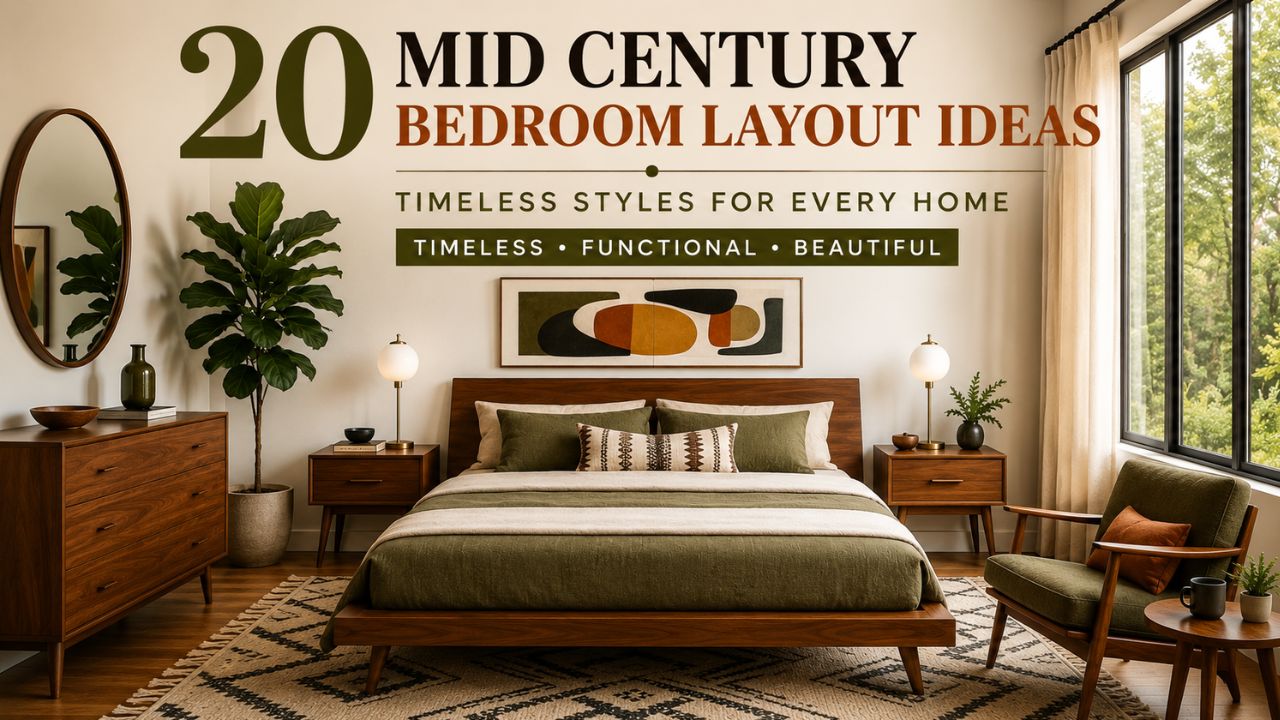
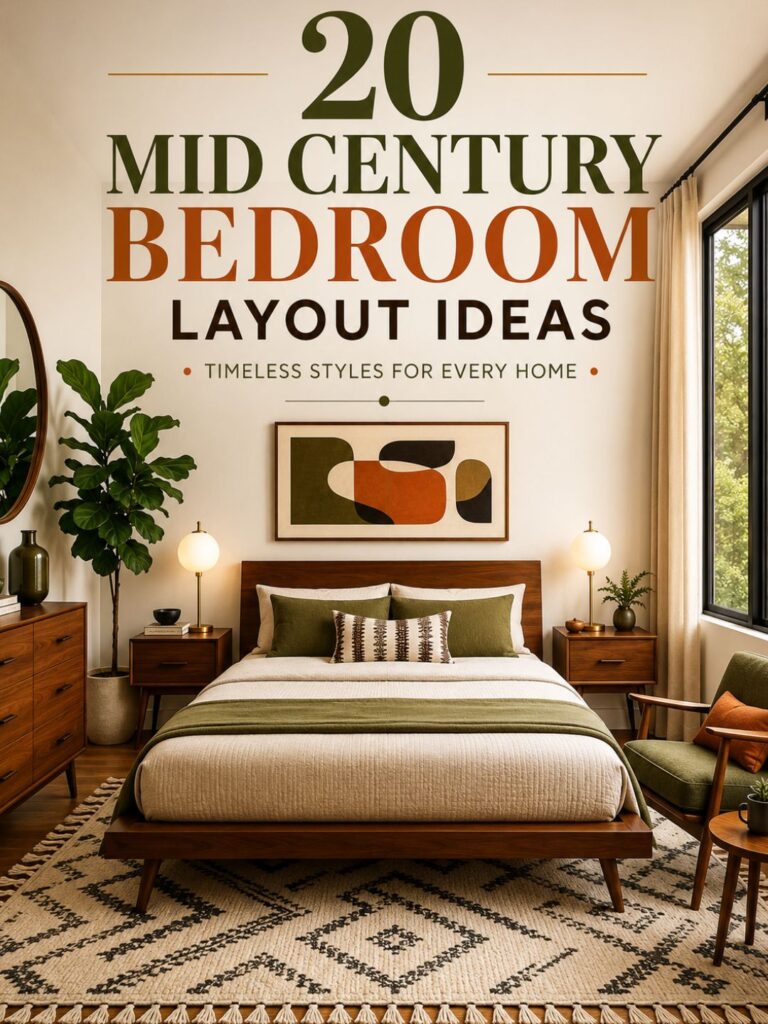
Mid century bedroom design focuses on clean lines, organic forms, practical furniture, warm wood finishes, and a strong connection to natural light. While many homeowners focus on buying the right furniture pieces, experienced interior designers know that the true secret to a stunning bedroom lies in the layout.
A well-planned bedroom layout improves flow, maximizes natural light, creates visual balance, and makes even small spaces feel larger. The placement of your bed, nightstands, seating, storage, and decorative elements can completely transform how a room looks and functions.
Whether you’re redesigning a compact guest room, a cozy apartment bedroom, or a spacious primary suite, these mid-century bedroom layout ideas will help you create a space that feels thoughtfully designed and effortlessly stylish.
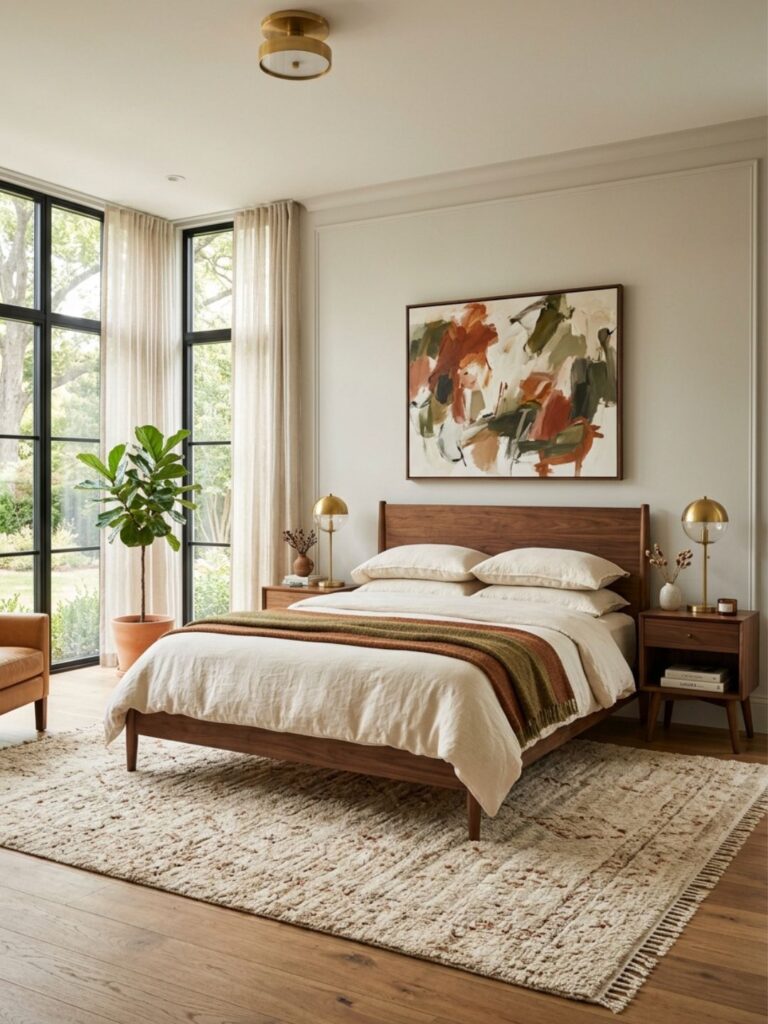
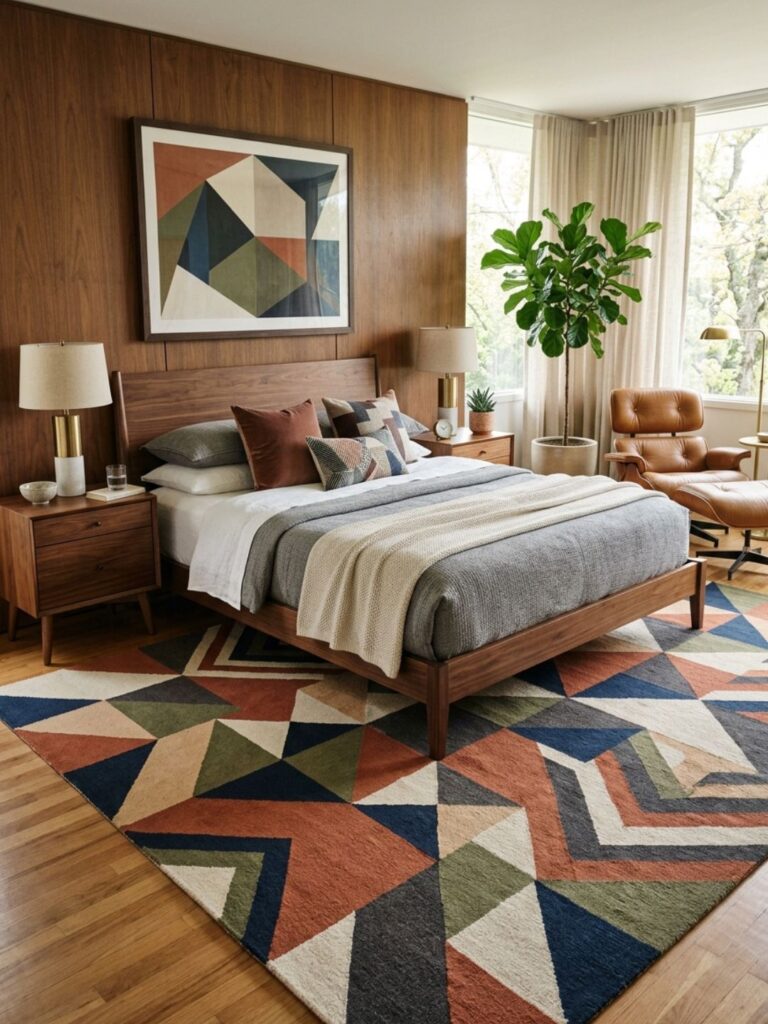
In this arrangement, the bed is centered on the room’s primary wall with matching nightstands placed on both sides. Symmetry naturally creates a sense of order and calm, making the room feel balanced and welcoming
Choose a low-profile walnut platform bed with tapered legs to establish an authentic mid-century aesthetic. Matching nightstands should feature clean lines and minimal hardware. Install globe sconces or brass table lamps on each side to reinforce the balanced composition.
To complete the look, hang a large abstract artwork above the bed that incorporates warm earth tones such as rust, mustard, olive, and cream. An oversized area rug should extend beneath the bed to anchor the furniture arrangement and add softness.
Designer Tip
Use identical lighting fixtures and nightstands, but introduce subtle variation through bedding textures and decorative accessories to prevent the room from feeling overly formal.
This layout creates an open and airy atmosphere while maximizing sunlight throughout the day. A walnut platform bed paired with a woven area rug helps ground the room without competing with the architecture. Add a reading chair near the window to create a cozy relaxation zone.
Indoor plants such as rubber trees, fiddle leaf figs, or bird-of-paradise plants strengthen the connection to nature. Light-filtering curtains can provide privacy while maintaining brightness.
This arrangement works exceptionally well in modern homes where expansive windows serve as a major architectural feature. The result feels fresh, spacious, and effortlessly elegant.
Designer Tip
Avoid tall furniture near corner windows. Keeping sightlines open makes the room appear significantly larger.
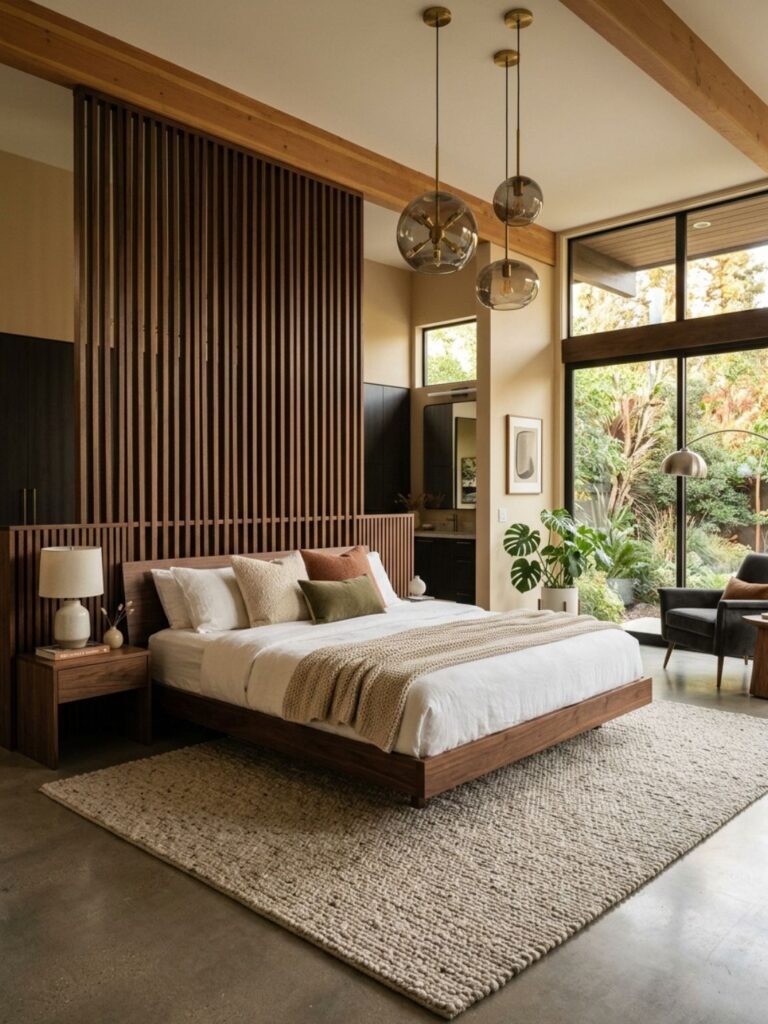
For homeowners with larger bedrooms, a floating bed layout creates an impressive designer look. Instead of placing the bed against a wall, position it toward the center of the room with a decorative divider behind it.
A walnut slatted partition, open bookshelf, or custom wood panel can act as a subtle room separator. This technique adds architectural interest while creating distinct zones within the bedroom.
The area behind the bed can be used for a dressing area, reading corner, or workspace. Because the bed becomes visible from multiple angles, invest in a high-quality bed frame and layered bedding that looks beautiful from every side.
Designer Tip
Keep surrounding furniture minimal so the floating bed remains the room’s primary focal point.
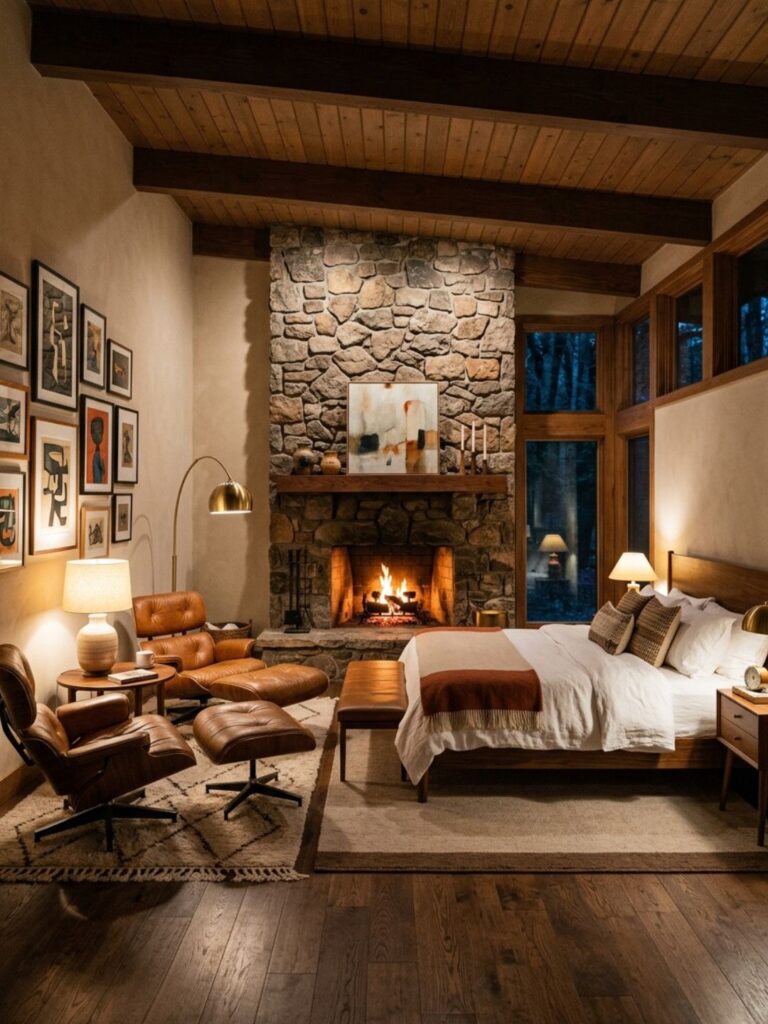
A fireplace instantly adds character and warmth to a bedroom. In a mid-century modern space, the fireplace should be treated as a major focal point rather than hidden behind furniture.
Position the bed so the fireplace remains visible from the sleeping area. If space allows, create a small seating area with two lounge chairs and a side table near the fireplace. This transforms the room into a multifunctional retreat where you can relax, read, or enjoy quiet evenings.
Natural materials such as stone, brick, and wood complement mid-century design beautifully. Pair them with warm textiles and soft lighting to enhance the cozy atmosphere.
This layout works especially well in primary bedrooms where comfort and luxury are priorities.
Designer Tip
Use warm accent lighting to highlight the fireplace even when it’s not in use.
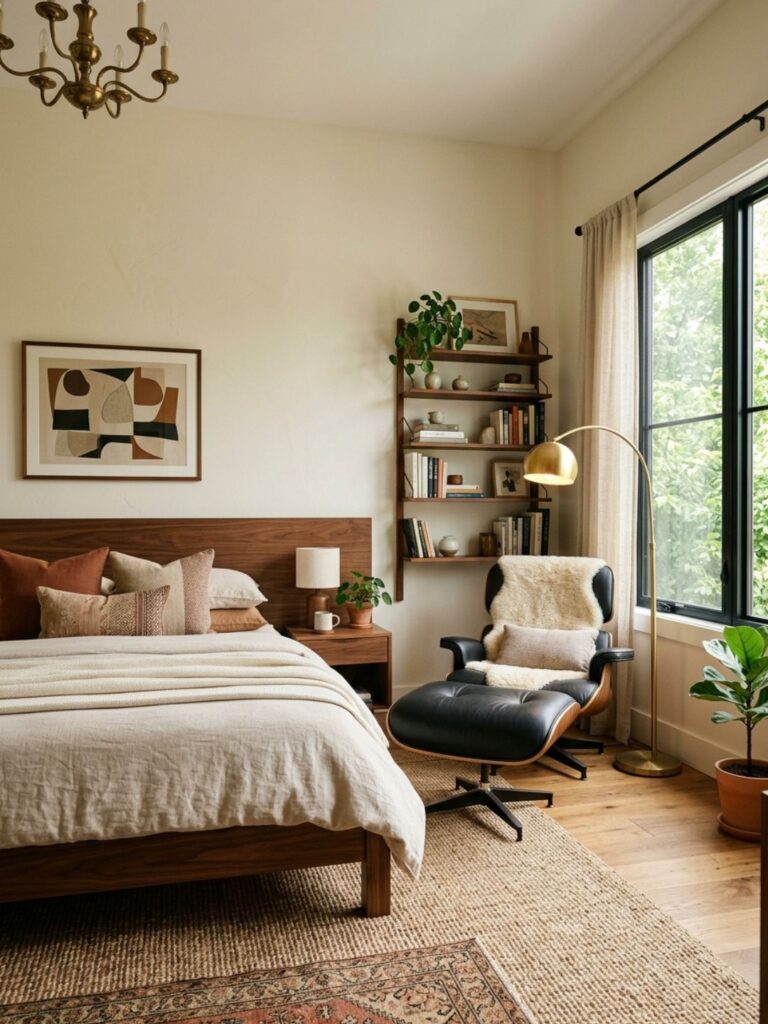
One of the most functional ways to enhance a bedroom is by incorporating a dedicated reading area. Position the bed on one side of the room and reserve a corner for a comfortable lounge chair, floor lamp, and side table.
An iconic mid-century-inspired chair instantly elevates the design while creating a relaxing retreat. A nearby bookshelf or floating shelves can provide storage for books and decorative accessories.
This layout creates visual balance by giving equal importance to rest and relaxation. It also makes larger bedrooms feel more intentional and organized.
Natural light is especially important for reading corners, so place the seating area near a window whenever possible.
Designer Tip
Layer a small accent rug beneath the reading chair to visually separate the nook from the sleeping area.
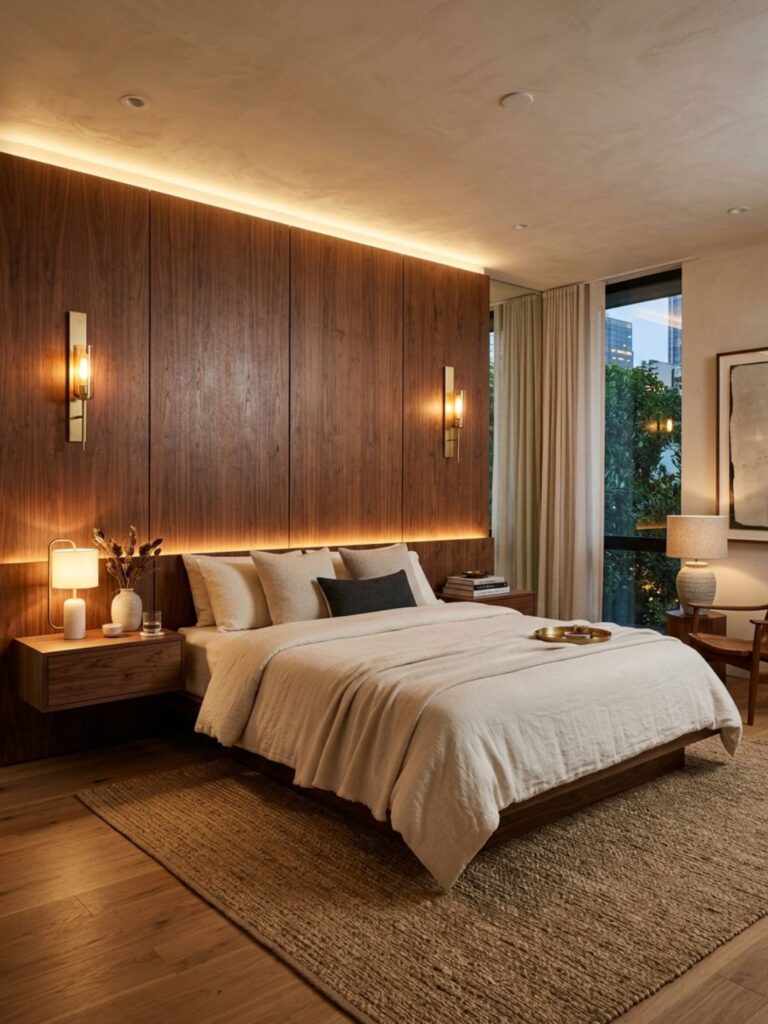
The bed is positioned centrally against this feature wall, creating a dramatic focal point that immediately draws attention when entering the room. Floating nightstands can be integrated directly into the wood paneling, creating a seamless and highly customized appearance. This approach not only adds visual impact but also eliminates clutter by reducing the need for bulky furniture.
The extended wood backdrop adds warmth and texture while emphasizing the horizontal lines that define mid-century design. Soft linen bedding in neutral shades helps balance the richness of the wood tones.
This layout works especially well in both small and large bedrooms because the continuous headboard visually widens the room and creates a cohesive look.
Designer Tip
Install hidden LED strip lighting behind the wood panels to create a soft ambient glow that enhances the architectural effect.
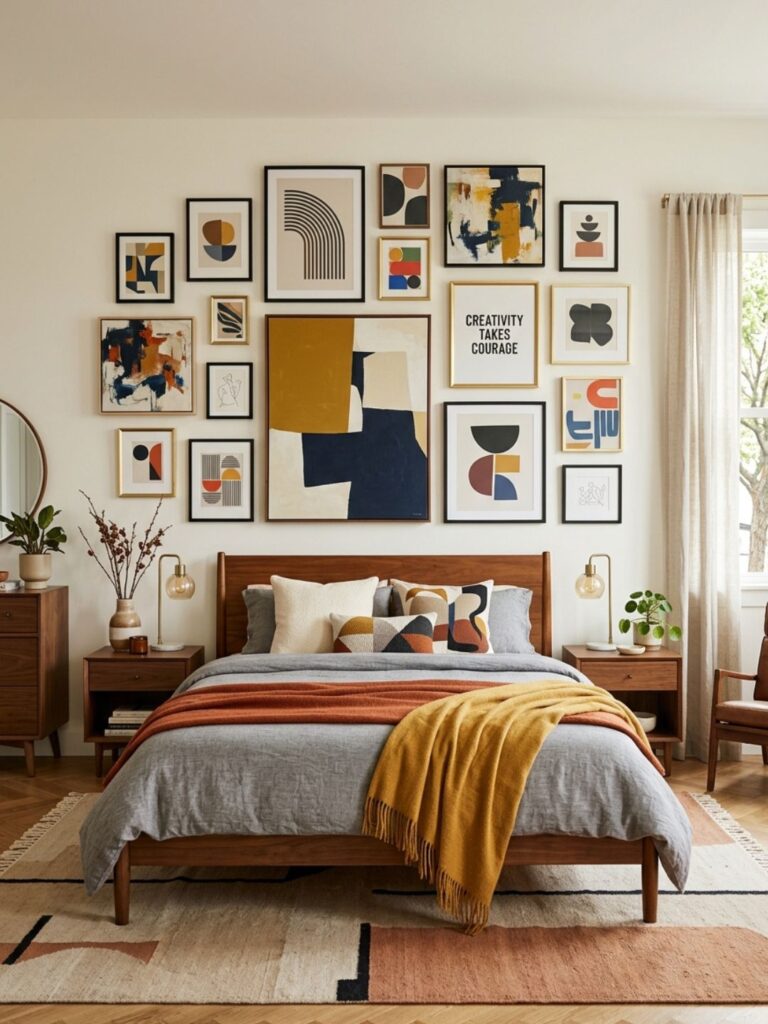
Mid-century gallery walls typically feature abstract art, vintage travel posters, geometric prints, architectural sketches, and nature-inspired artwork. Choose frames in black, walnut, or brass finishes to maintain stylistic consistency.
The furniture arrangement should remain relatively symmetrical to prevent the artwork from overwhelming the room. A balanced layout helps the gallery wall feel intentional rather than chaotic.
Layering different frame sizes creates depth while maintaining a cohesive overall composition. This layout is ideal for homeowners who enjoy showcasing personal style through artwork and collectibles.
Designer Tip
Limit the artwork palette to three or four complementary colors to create a sophisticated, cohesive display.
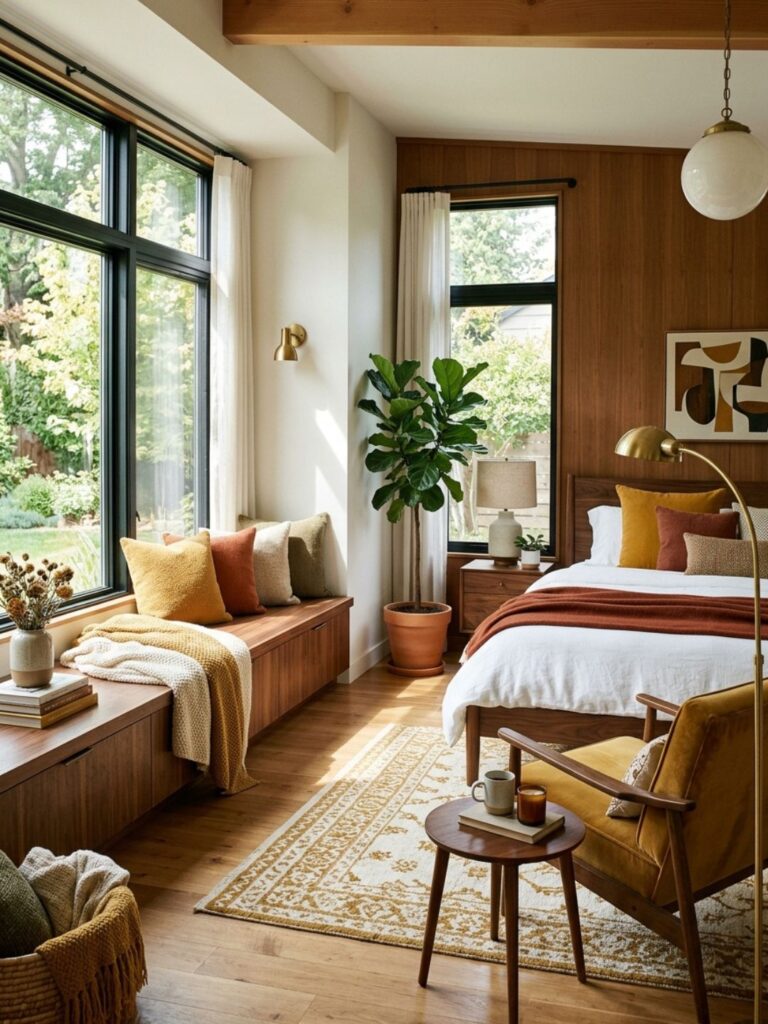
A built-in window bench can become one of the most attractive and functional features in a mid-century bedroom. Position the bed opposite the window bench to create visual balance between the two primary focal points.
The bench provides additional seating, hidden storage, and a comfortable spot for reading or enjoying morning coffee. Upholster the cushions in textured fabrics such as bouclé, linen, or woven cotton for added warmth and comfort.
Accent pillows in mustard yellow, rust orange, olive green, and terracotta tones help reinforce the classic mid-century palette. Large windows nearby flood the room with natural light, enhancing the cozy atmosphere.
This layout is particularly effective in smaller bedrooms because it maximizes functionality without requiring additional furniture pieces.
Designer Tip
Incorporate storage drawers beneath the bench to reduce bedroom clutter and improve organization.
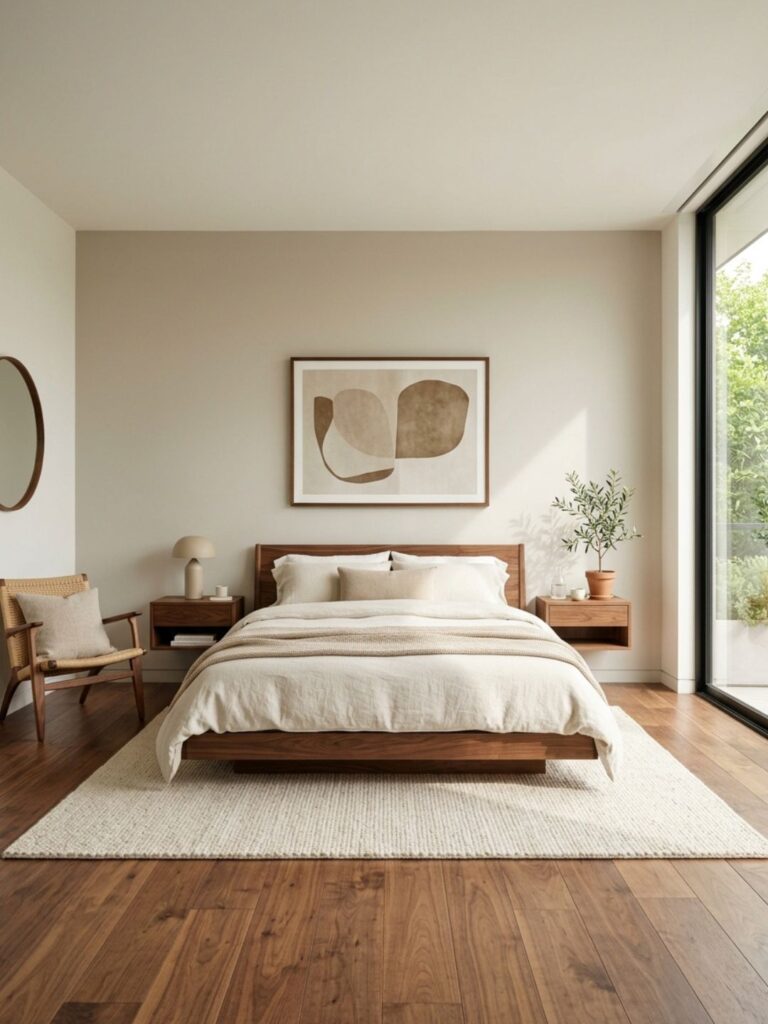
In a minimalist open layout, only essential furniture pieces are included, allowing the architecture and materials to take center stage.
The room typically features a platform bed, two streamlined nightstands, a simple dresser, and minimal decorative accessories. Furniture is spaced generously apart, creating a sense of openness and calm.
Neutral bedding, warm wood finishes, and subtle textures provide visual interest without creating clutter. Large windows and natural light become major design features in this arrangement.
This layout is ideal for smaller bedrooms because it eliminates unnecessary furniture while making the room feel larger and more breathable.
Designer Tip
Focus on quality rather than quantity. A few beautifully crafted pieces will have greater impact than a room filled with accessories.
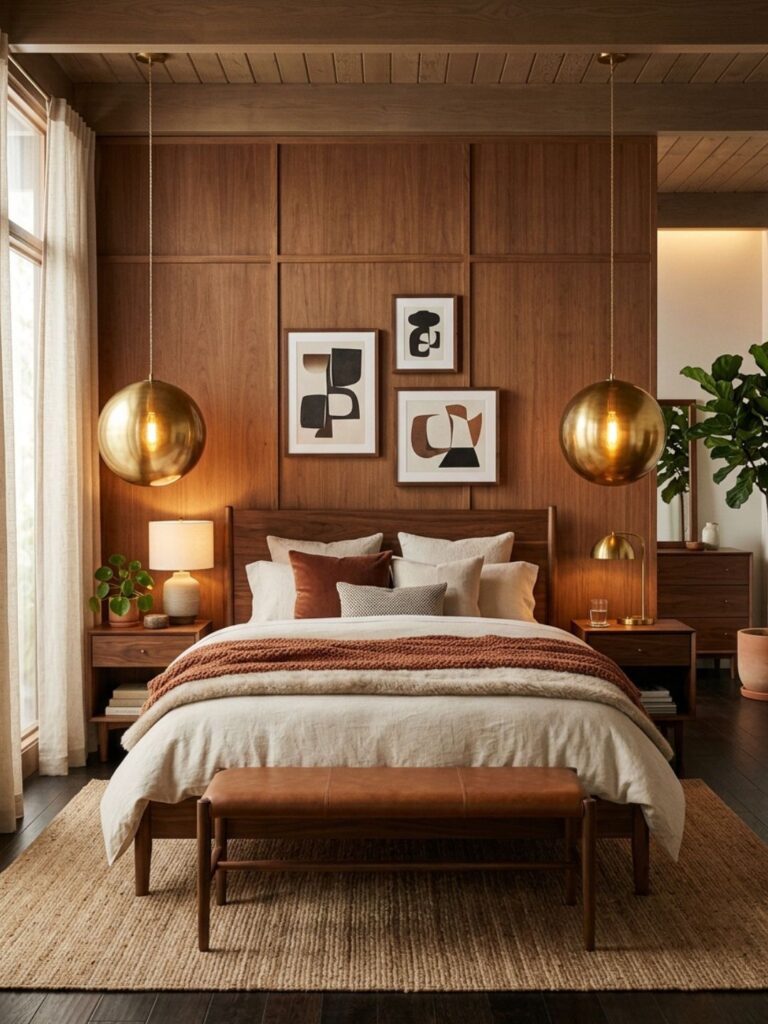
Traditional bedside lamps aren’t the only option for bedroom lighting. In this layout, oversized pendant lights are suspended above the nightstands, creating a dramatic and sculptural focal point.
Popular mid-century pendant styles include globe lights, brass fixtures, smoked glass pendants, and organic modern designs inspired by the 1950s and 1960s. The hanging lights free up valuable nightstand space while introducing visual interest at different heights.
The bed remains centered within the room, but the lighting becomes a key design feature. This approach works particularly well in bedrooms with high ceilings where vertical space can be fully utilized.
Combined with warm wood furniture and layered textiles, statement lighting helps create a boutique hotel atmosphere.
Designer Tip
Hang pendant lights slightly lower than traditional lamps to create a cozy, intimate environment.
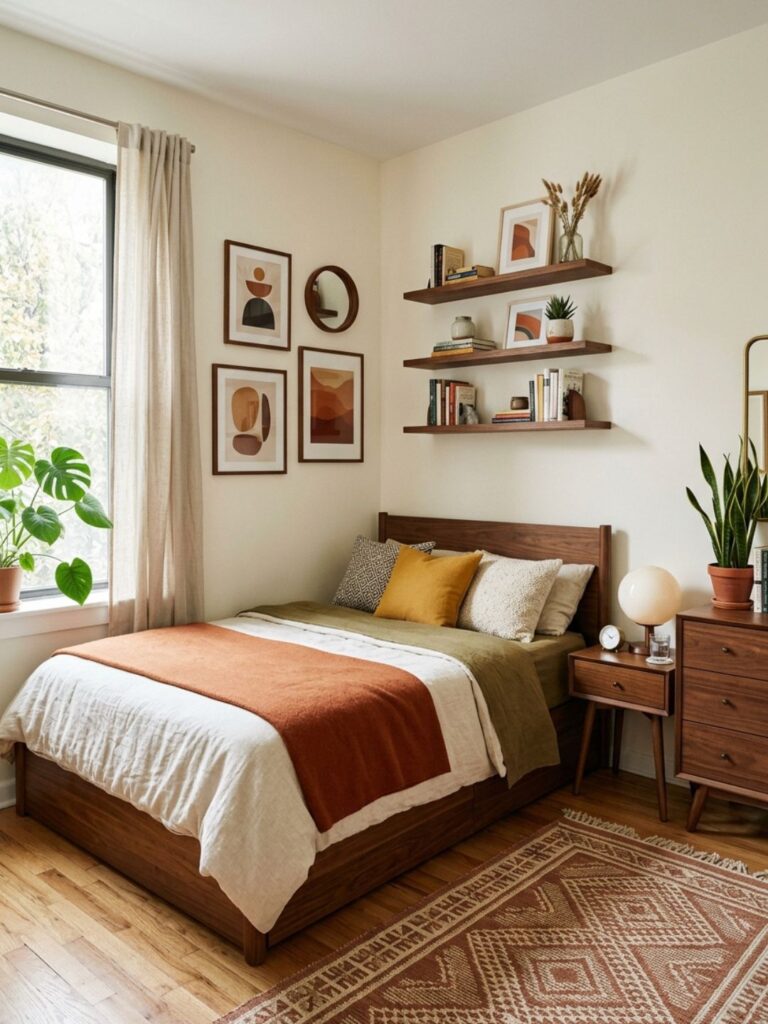
Not every bedroom has the luxury of abundant square footage. In compact spaces, positioning the bed in a corner can free up valuable floor area while maintaining functionality.
Place the headboard against one wall and the side of the bed against another. This arrangement creates additional room for storage, a desk, or a reading chair. Mid-century furniture’s slim profiles and tapered legs help prevent the room from feeling crowded.
Floating shelves can replace traditional nightstands, maximizing usable space while maintaining a clean aesthetic.
This layout is particularly effective in apartments, guest rooms, and urban homes where efficient space planning is essential.
Designer Tip
Use wall-mounted lighting instead of table lamps to free up every inch of available surface space.
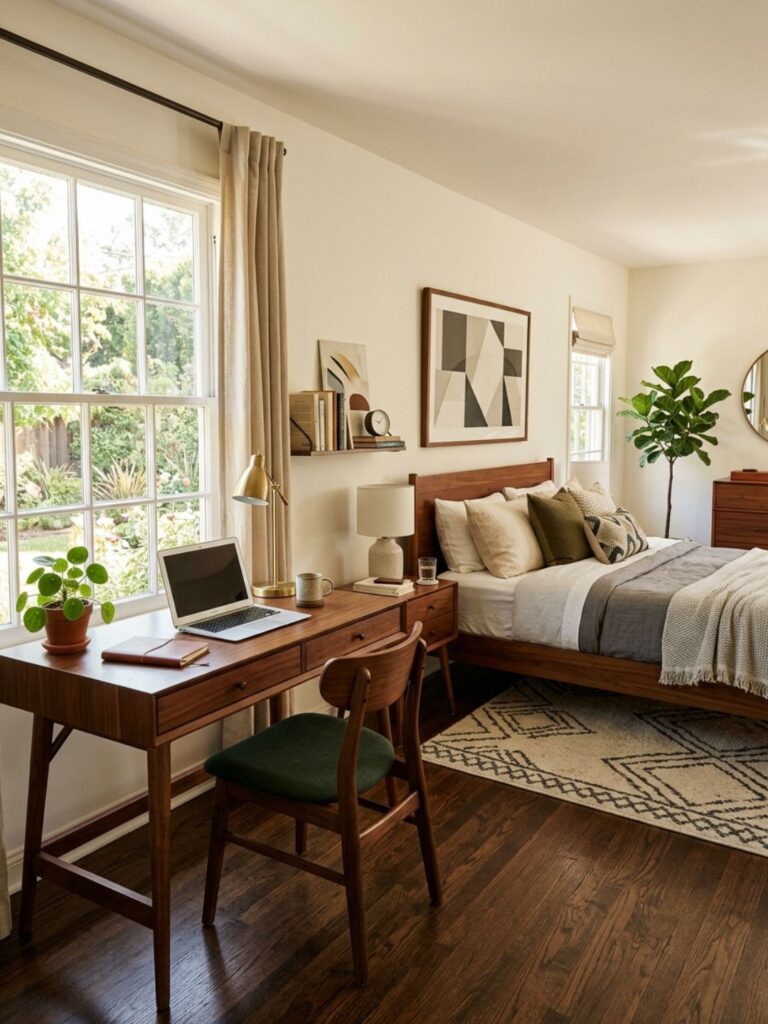
Modern lifestyles often require bedrooms to serve multiple purposes. This layout combines a sleeping zone with a workspace while maintaining the clean aesthetic associated with mid-century interiors.
Position the bed on the primary wall and create a dedicated office area near a window. A walnut writing desk with tapered legs blends seamlessly with other mid-century furnishings.
Maintaining clear separation between zones helps the room feel organized and intentional rather than crowded. Area rugs can further define each section of the room.
This layout works well for remote workers, students, and anyone who needs a productive workspace at home.
Designer Tip
Choose furniture with similar wood finishes to create visual consistency across different functional areas.
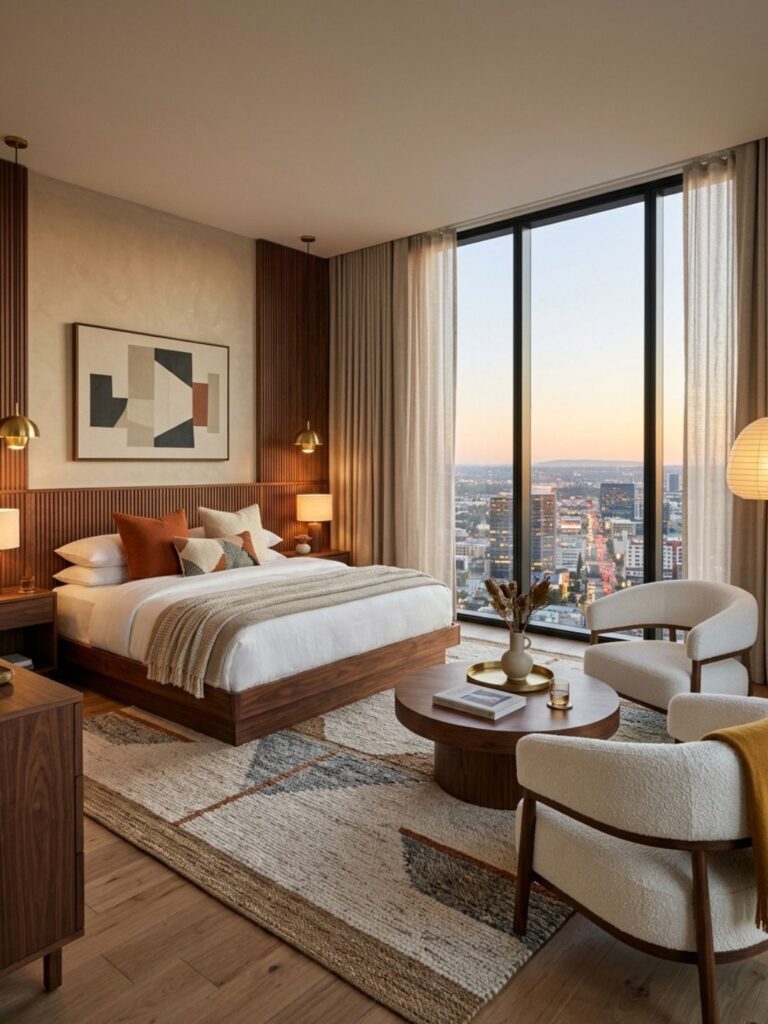
If you love the polished look of boutique hotels, this layout brings that same sense of luxury into the home. Position the bed on the main wall and create a dedicated seating area near a window or fireplace. The sleeping zone and lounge area should feel connected yet distinct.
Choose a low-profile walnut bed, a pair of accent chairs, and a round coffee table. Layer textures through bouclé upholstery, wool rugs, and linen bedding. The seating area becomes a place to read, enjoy morning coffee, or unwind before bed.
This layout works particularly well in large primary bedrooms because it creates multiple functional zones while maintaining an open feel.
Designer Tip
Use a large area rug beneath the seating area to visually separate it from the sleeping zone.
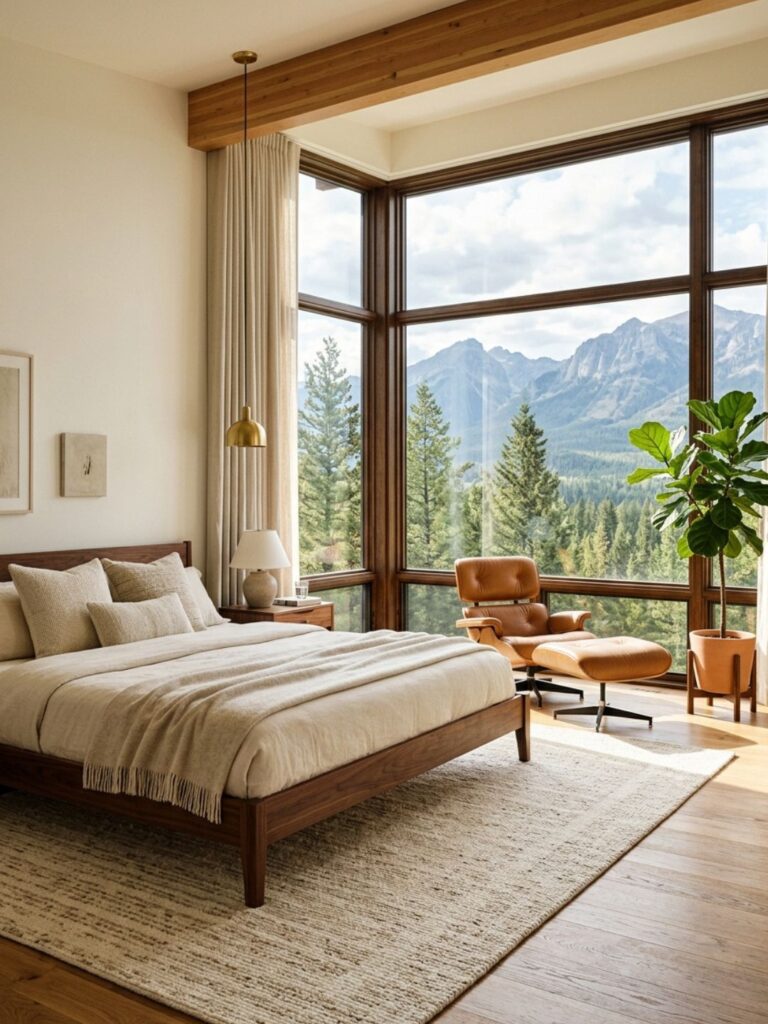
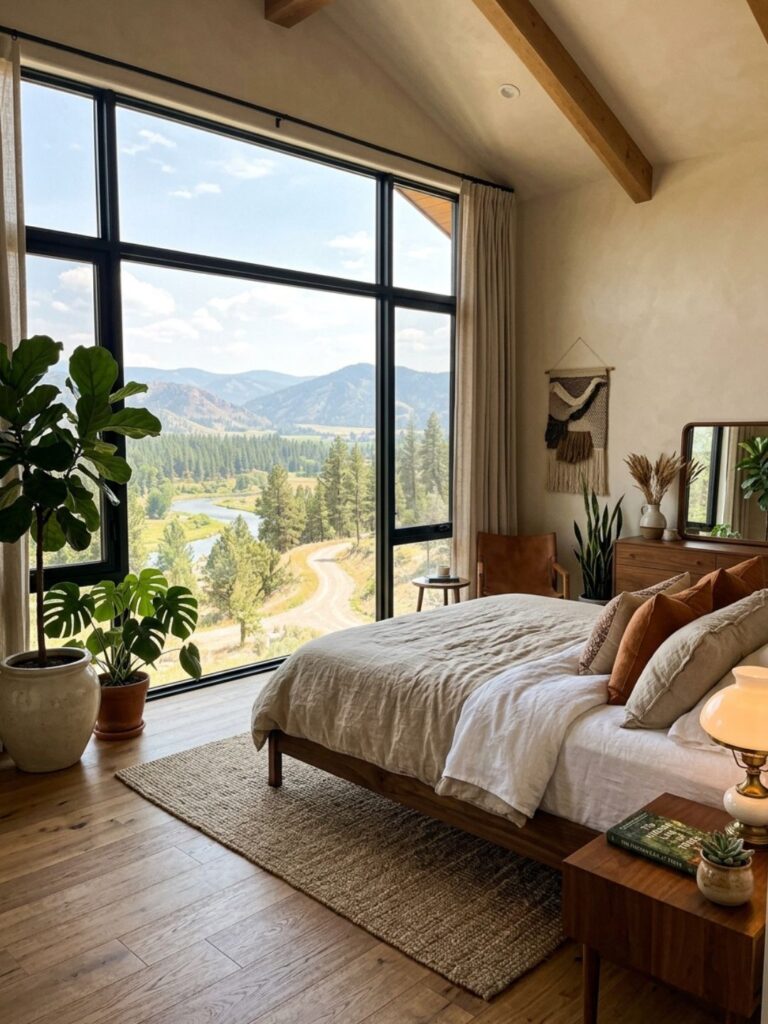
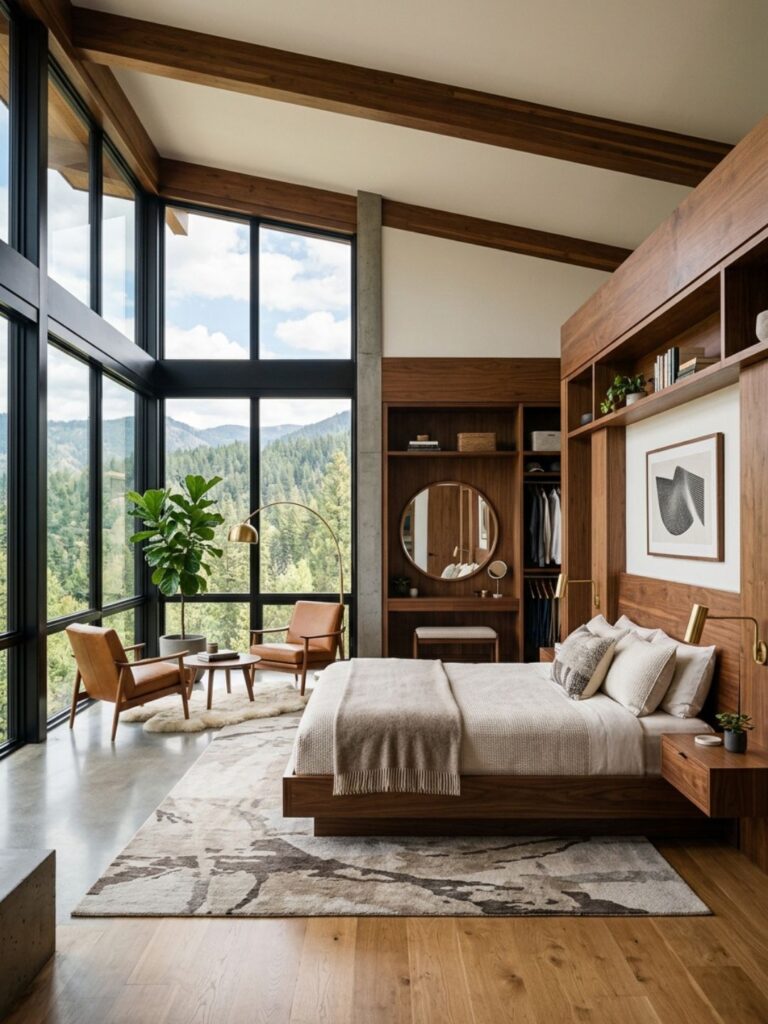
Some bedrooms feature a stunning picture window overlooking a garden, forest, mountain view, or city skyline. In this layout, the furniture arrangement is designed to celebrate the view.
Position the bed so that you can enjoy the scenery from bed without blocking the window itself. Keep furniture low-profile and avoid tall dressers that interrupt sightlines.
Natural materials become especially important in this arrangement because they help bridge the connection between indoor and outdoor environments. Wood furniture, linen curtains, woven rugs, and indoor plants complement the view beautifully.
Designer Tip
Use sheer drapery panels instead of heavy curtains to preserve natural light and maximize views.
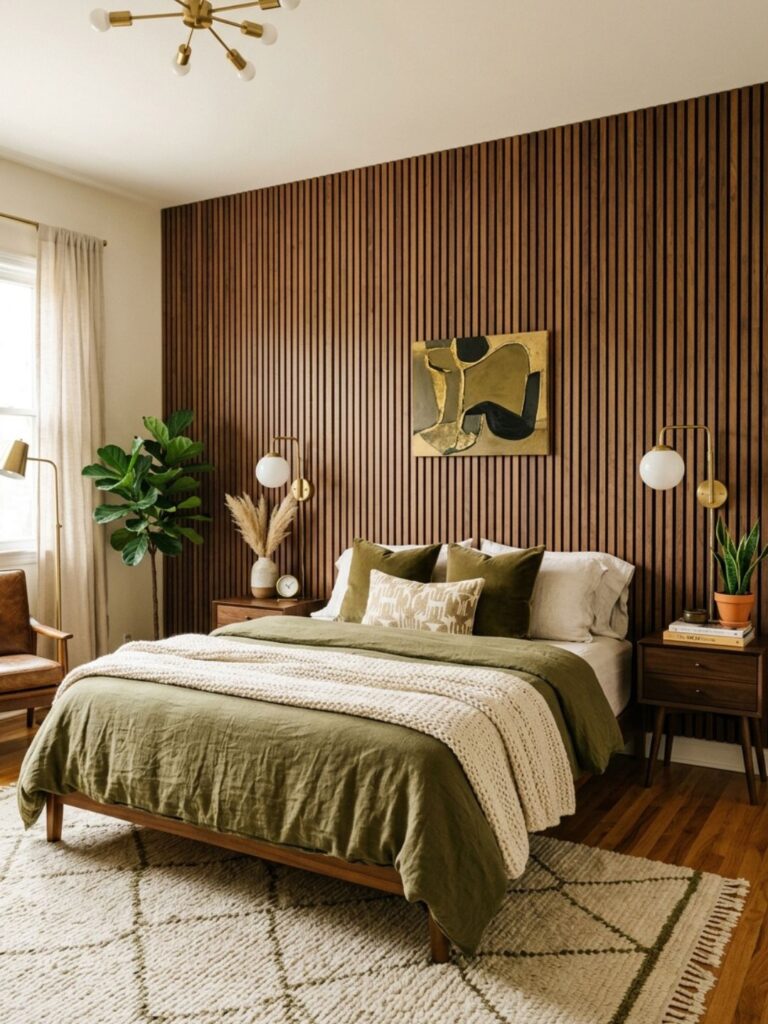
An accent wall can dramatically enhance a mid-century bedroom when executed thoughtfully. Position the bed against a statement wall finished in walnut slats, vertical paneling, textured wallpaper, or a rich paint color such as olive green, terracotta, navy, or charcoal.
The accent wall immediately becomes the room’s focal point, reducing the need for excessive decoration elsewhere. Keep the remaining walls lighter to maintain balance and prevent the room from feeling heavy.
This layout is especially useful for homeowners who want a designer look without investing in extensive renovations.
Designer Tip
Choose warm, earthy colors that complement natural wood tones rather than competing with them.
Interior designers often use rugs to organize furniture placement and establish visual hierarchy. In this layout, an oversized area rug serves as the foundation for the entire room.
The bed, nightstands, and nearby furniture are arranged around the rug, creating a cohesive and intentional composition. Large rugs help unify furniture groupings while adding warmth and texture.
Choose a geometric, vintage-inspired, or neutral woven rug that reflects mid-century aesthetics. The rug should extend at least 24 inches beyond the sides of the bed whenever possible.
Designer Tip
A larger rug almost always looks more expensive and designer-approved than one that is too small.
In larger homes, the primary bedroom may flow directly into a dressing area, sitting room, or ensuite bathroom. This layout embraces openness while maintaining functional zones.
The bed remains the central focal point, while furniture placement naturally guides movement through the space. Area rugs, lighting, and furniture groupings help define individual zones without requiring walls.
Mid-century interiors are particularly well suited to open layouts because they prioritize clean lines and uncluttered spaces.
Designer Tip
Maintain consistent materials and finishes throughout the suite to create visual continuity.
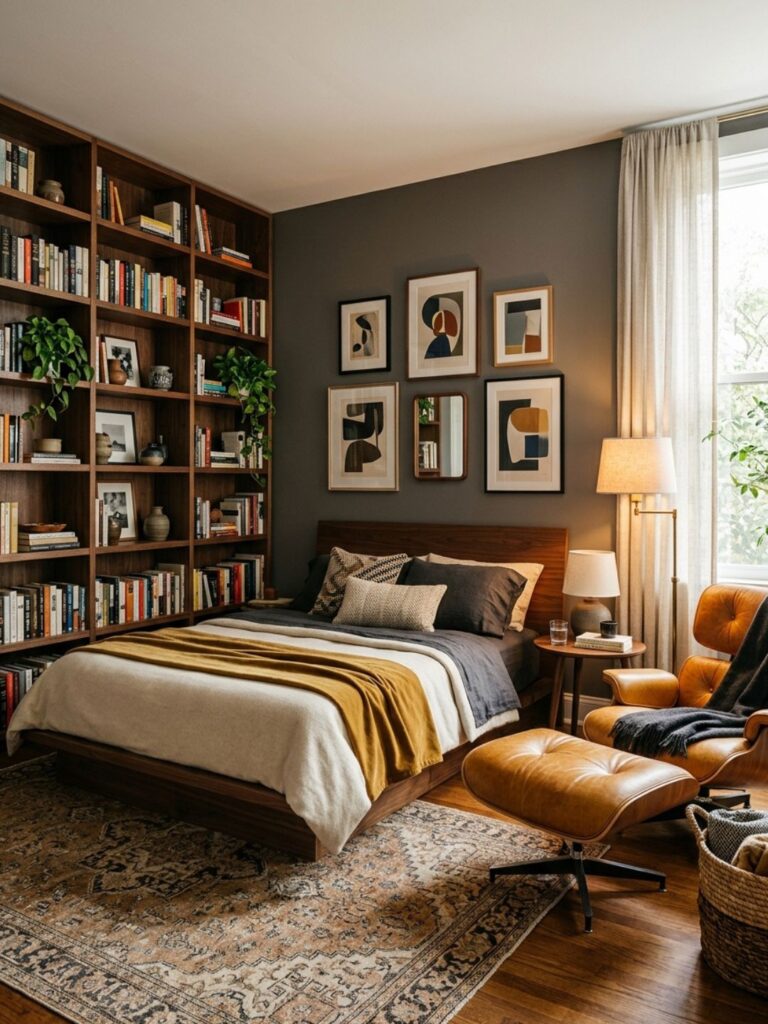
For book lovers, incorporating a library wall can transform a bedroom into a personal retreat. Position the bed opposite a built-in bookshelf or wall-to-wall shelving system.
Books become part of the décor while adding warmth, texture, and personality. A comfortable reading chair placed nearby completes the arrangement.
This layout creates a cozy atmosphere while preserving the clean lines associated with mid-century design.
Designer Tip
Mix books with decorative objects, ceramics, and framed artwork for a curated appearance.
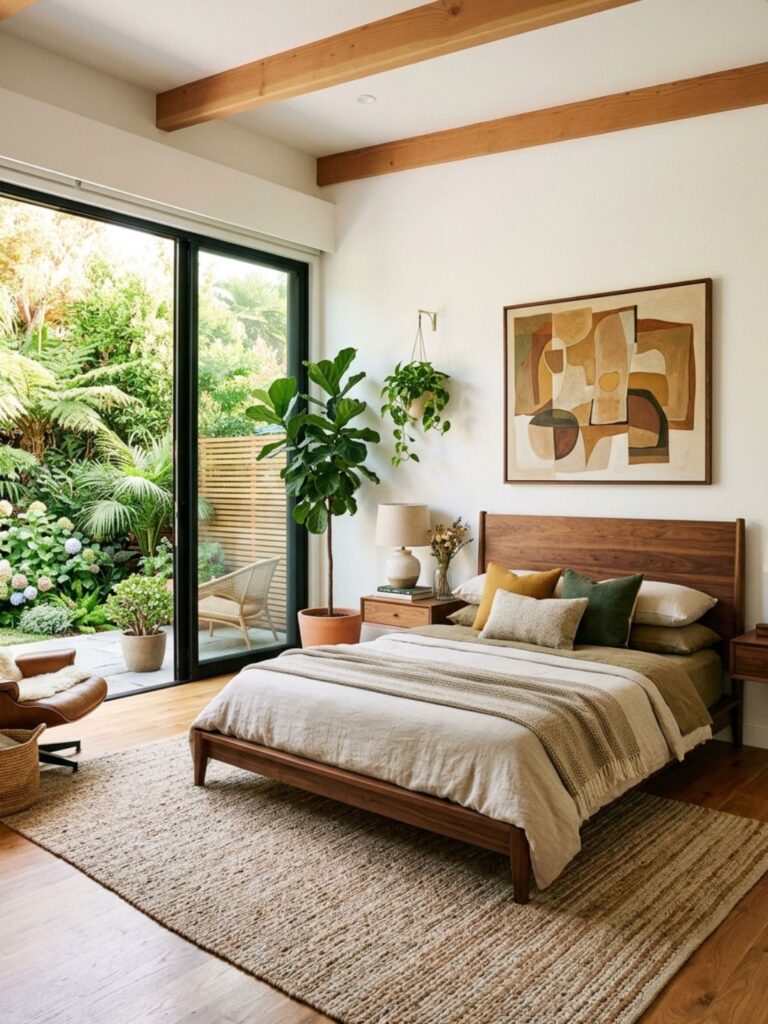
One of the defining characteristics of authentic mid-century architecture is the seamless connection between indoor and outdoor spaces.
Position the bed to face large sliding glass doors, a private patio, or a garden view. Keep furniture arrangements open and unobstructed to maximize the visual relationship with nature.
Natural materials such as walnut, teak, linen, jute, and stone reinforce the organic feel of the room. Large plants help blur the boundary between indoors and outdoors.
Designer Tip
Choose furniture with exposed legs to maintain a light and airy appearance.
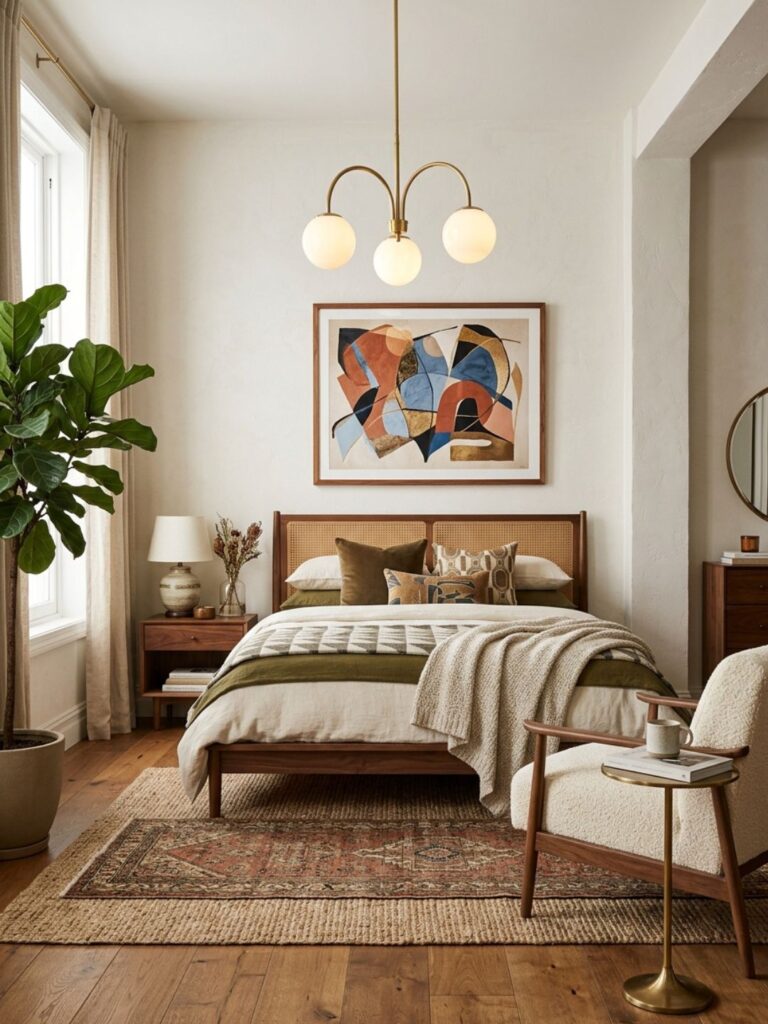
This layout combines several designer techniques into one cohesive space. The bed serves as the focal point, while layered rugs, statement lighting, artwork, seating, and carefully selected accessories add depth and sophistication.
Instead of relying on a single dramatic feature, the room feels interesting because of multiple complementary layers. Rich wood tones, varied textures, warm lighting, and thoughtfully curated décor work together to create a collected-over-time appearance.
This layout often appears in high-end interior design magazines because it feels luxurious without looking overly staged.
Designer Tip
Focus on layering different textures rather than adding excessive colors. Texture creates richness while maintaining visual calm.
Why Layout Matters in Mid-Century Design
Many homeowners focus solely on furniture selection when creating a mid-century bedroom. However, professional designers know that layout determines how a room feels and functions.
The best mid-century bedrooms prioritize:
Open circulation paths
Functional furniture placement
Balanced visual weight
Strong focal points
Natural light optimization
Minimal clutter
Warm organic materials
When these principles are combined thoughtfully, even a modest bedroom can feel elegant, spacious, and professionally designed.
Frequently Asked Questions (FAQs)
Can mid-century design work in small bedrooms?
Absolutely. The style’s emphasis on clean lines, functional furniture, and minimal clutter makes it ideal for small spaces.
Are mid-century bedrooms still in style?
Yes. Mid-century modern remains one of the most popular and timeless interior design styles due to its versatility and functionality.
Should mid-century bedrooms have lots of décor?
No. Mid-century design prioritizes intentional decoration rather than excessive accessories.
Can I mix modern furniture with mid-century pieces?
Yes. Many contemporary furniture pieces blend beautifully with authentic mid-century elements.
What type of artwork complements a mid-century bedroom layout?
Abstract paintings, geometric prints, vintage travel posters, architectural sketches, and nature-inspired artwork are all excellent choices. Oversized pieces often work best as statement focal points.
Should all furniture match in a mid-century bedroom?
No. In fact, designer bedrooms often look more authentic when different pieces complement each other rather than matching perfectly. Consistent wood tones and similar silhouettes help create cohesion.
What window treatments work best in a mid-century bedroom?
Floor-to-ceiling linen curtains, woven shades, bamboo blinds, and simple drapery panels are all popular choices. Avoid overly ornate window treatments that can compete with the room’s clean lines.
What is the biggest mistake people make when designing a mid-century bedroom?
One of the most common mistakes is overcrowding the room with furniture and décor. Mid-century modern design relies on open space and intentional simplicity to achieve its timeless appeal.
Are platform beds necessary for a mid-century bedroom?
While not mandatory, platform beds are one of the most recognizable features of mid-century design. Their low-profile appearance helps create the clean, horizontal lines associated with the style.
What flooring color works best with walnut furniture?
Medium oak, natural oak, warm beige wood flooring, and light walnut tones all pair beautifully with walnut furniture while maintaining visual warmth.