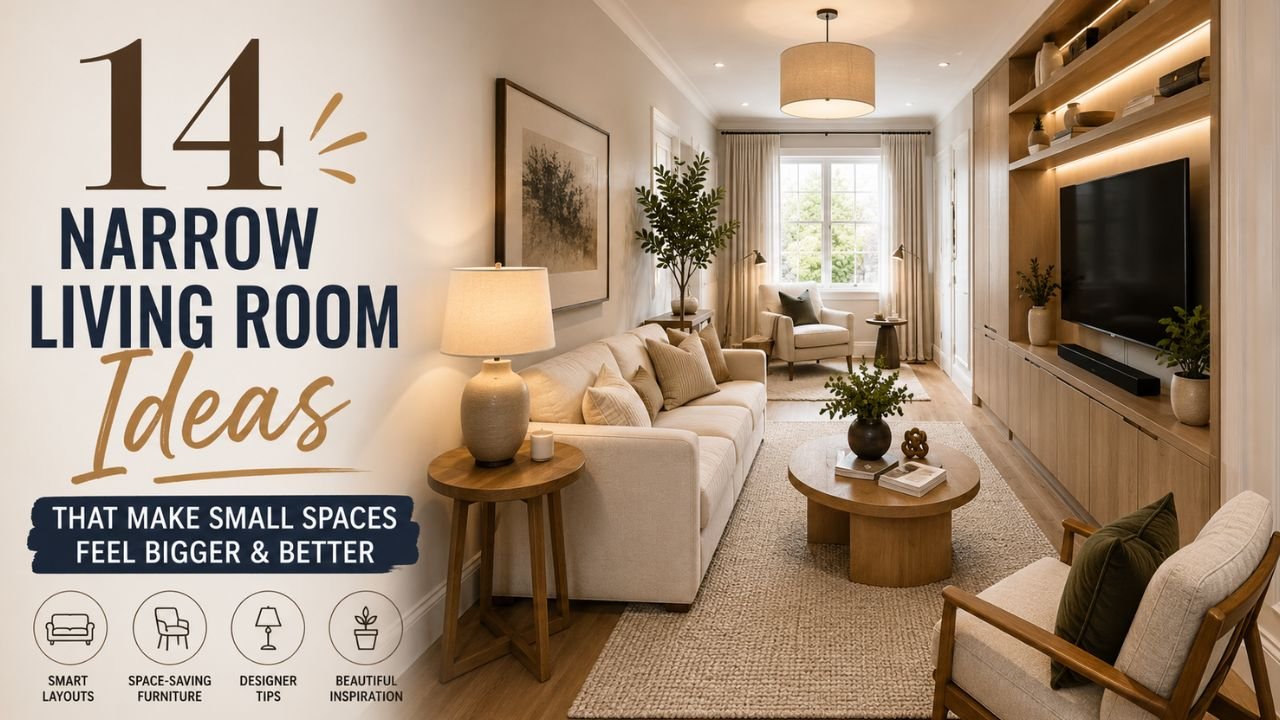
14 Narrow Living Room Ideas That Make a Small Space Feel Surprisingly Spacious

A narrow living room can feel like an interior-design puzzle.

The sofa seems too large. The coffee table interrupts the walkway. One wall looks completely empty while the opposite wall feels overloaded. And if you place everything against the walls simply because the room is narrow, the space can end up feeling less intentional rather than more spacious.

But here’s the good news: a narrow living room doesn’t need to be physically wider to feel better.

The real goal is to control how the eye moves through the room.

Good narrow-room design is about creating clear circulation, choosing furniture with the right proportions, giving the eye visual breathing space, and making every piece earn its place.

Whether your room is a long apartment living room, a compact family room, a rental, or an awkward rectangular space, the following ideas focus on why the arrangement works and when it doesn’t.

Before Decorating: Understand Your Narrow Living Room

Before buying another piece of furniture, measure the room.

You don’t need an architect’s drawing. You simply need to know:

  • Overall room length
  • Overall room width
  • Door locations
  • Window locations
  • Radiators or vents
  • TV connections
  • Main walking routes
  • Approximate sofa depth
  • Available wall space

The most important measurement is often the clear walking path.

A beautiful room that forces people to squeeze sideways between the sofa and coffee table isn’t functioning well.

For many compact spaces, a comfortable main walkway is roughly 30–36 inches where possible, although the exact requirement depends on the room and how it is used.

The other major rule is to stop thinking of your narrow room as one long rectangle.

Instead, think of it as a sequence of zones:

entry → conversation → storage/entertainment → window/light

That shift alone can make furniture placement much easier.

Float the Sofa Instead of Pushing Everything Against the Walls

One of the most common mistakes in a narrow living room is automatically pushing the sofa against the longest wall.

It seems logical.

But sometimes leaving a small amount of space behind the sofa creates a much stronger layout.

A sofa can act as a subtle room divider, especially when the living room is long enough to contain more than one functional zone.

For example, the sofa could separate the main seating area from a small reading corner or console zone.

Best for

Long rectangular living rooms where the sofa doesn’t need to sit directly against the wall.

Choose this when

You have enough room to maintain a comfortable walkway around the seating area.

Avoid when

The room is extremely narrow and floating the sofa would make circulation awkward.

Expert Tip

Don’t float furniture simply because designers do it in large rooms. The technique only works when the room has enough breathing space.

The goal isn’t to make the sofa look detached. It’s to make the room feel intentionally zoned.

Steal This Look

Use:

  • Low-profile sofa
  • Slim console behind sofa
  • Narrow table lamp
  • Large rug
  • Round coffee table
  • One oversized artwork

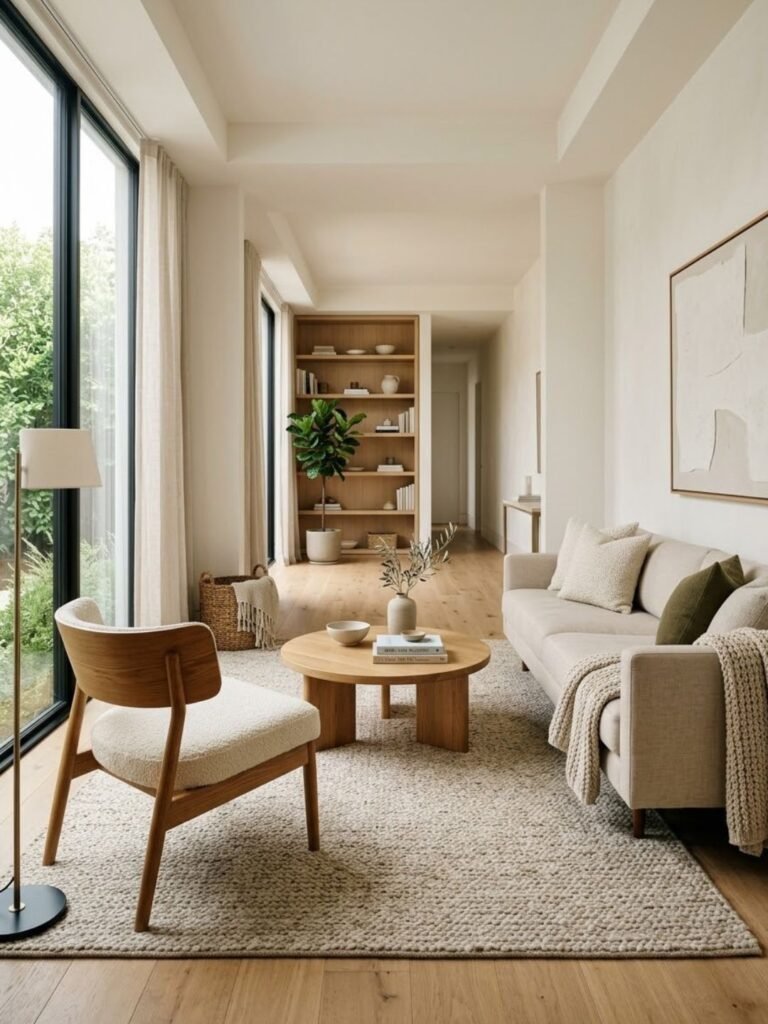
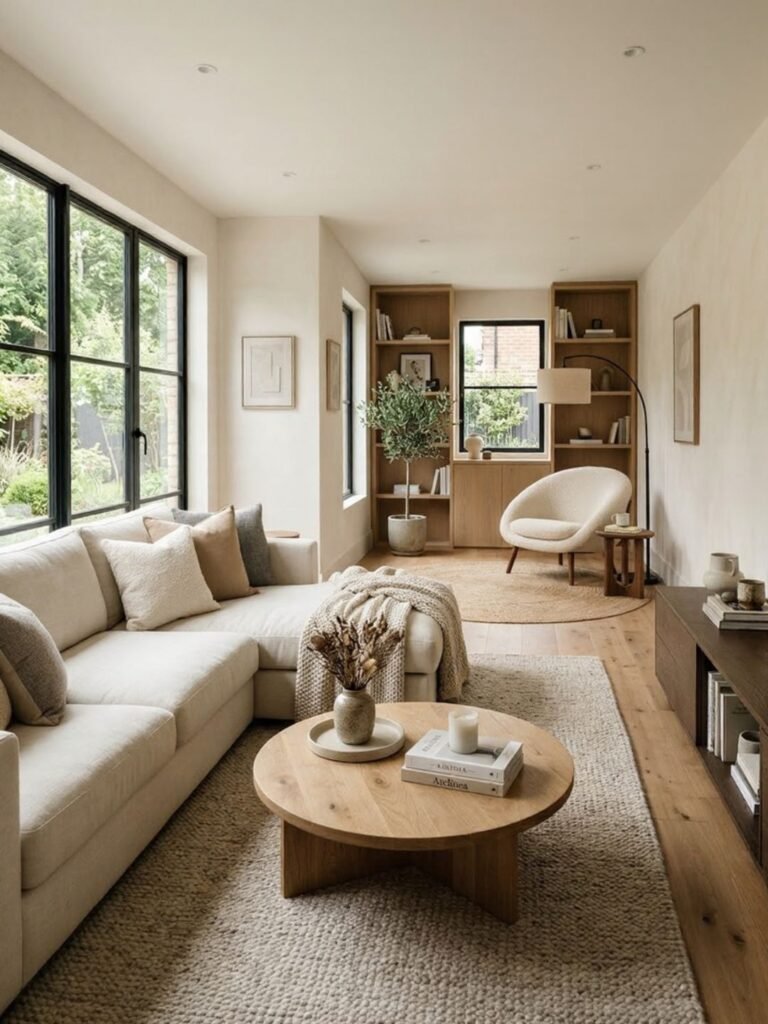
Use a Slim Sofa With a Deeper Accent Chair

You don’t necessarily need every seat to have the same proportions.

In fact, mixing furniture depths can be one of the smartest ways to make a narrow living room functional.

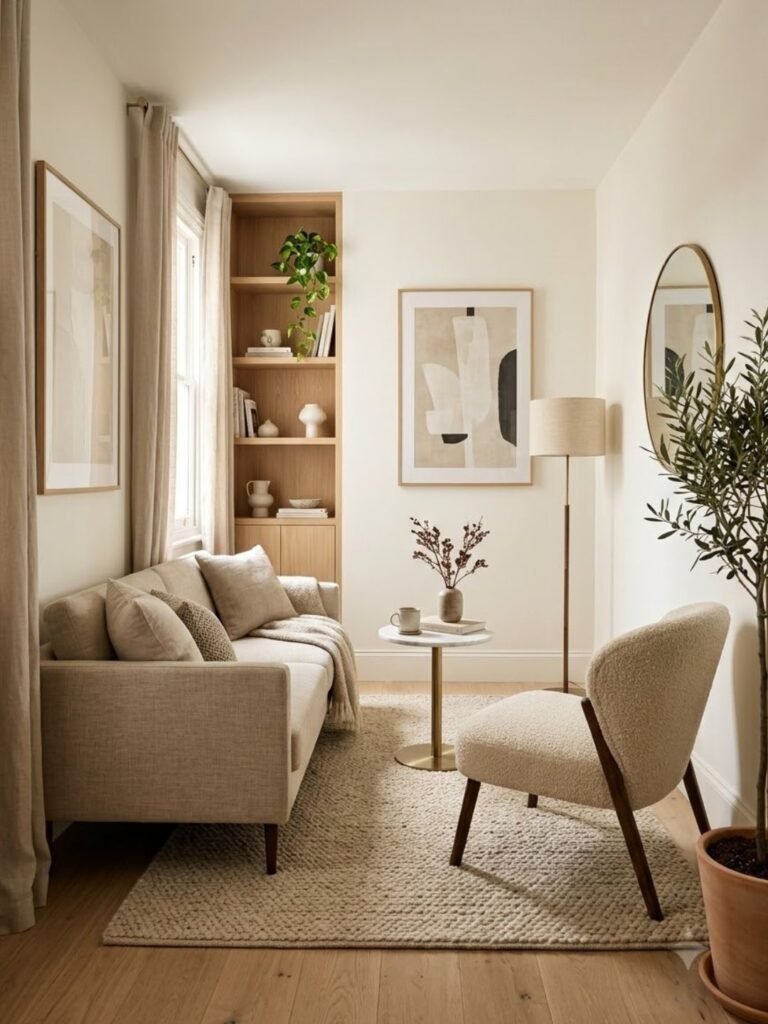
Instead of choosing an oversized sectional, consider a relatively slim sofa paired with one or two visually lighter chairs.

The sofa establishes the main seating direction, while the chair provides additional seating without creating a solid visual barrier.

A chair can also be angled slightly toward the sofa rather than placed directly opposite it.

That creates a more relaxed conversation area.

Best for

Rooms approximately 8–10 feet wide, depending on furniture dimensions and circulation needs.

Budget Option

Instead of replacing your sofa, consider replacing only bulky accent chairs with:

  • armless chairs
  • slipper chairs
  • compact lounge chairs
  • lightweight wood-frame chairs

Avoid When

Your sofa is already oversized relative to the room.

In that situation, adding another large chair will only compound the problem.

Steal This Look

Pair: Slim sofa + one sculptural chair + round side table + soft rug

This gives you multiple seats without visually filling the entire room.

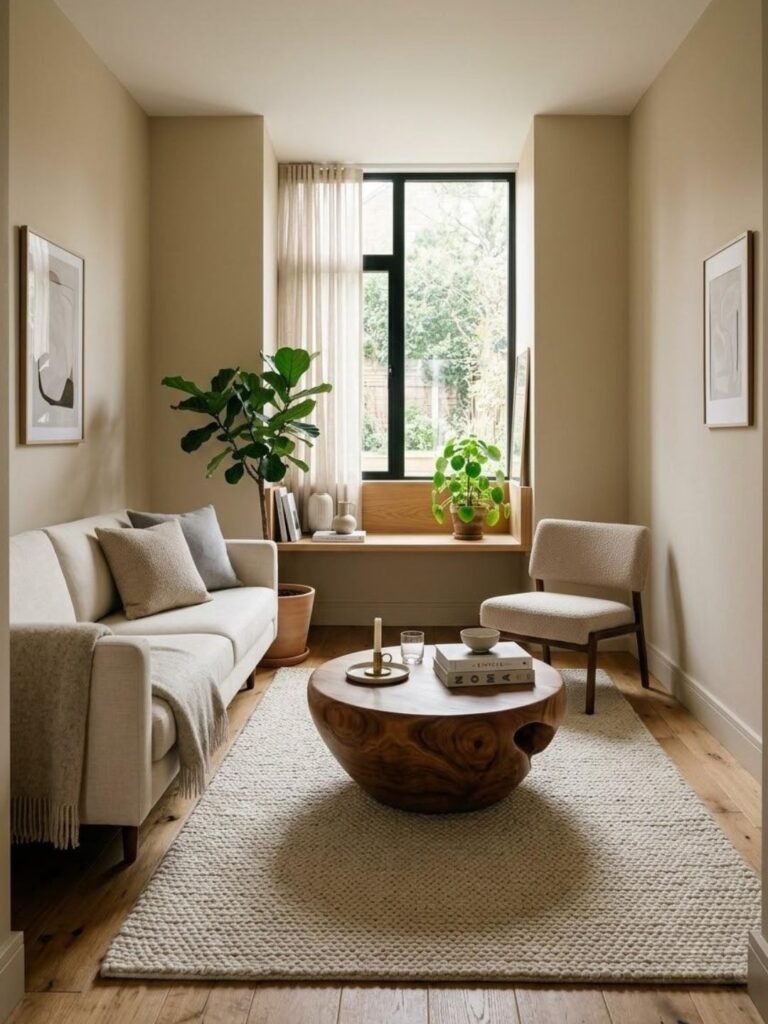
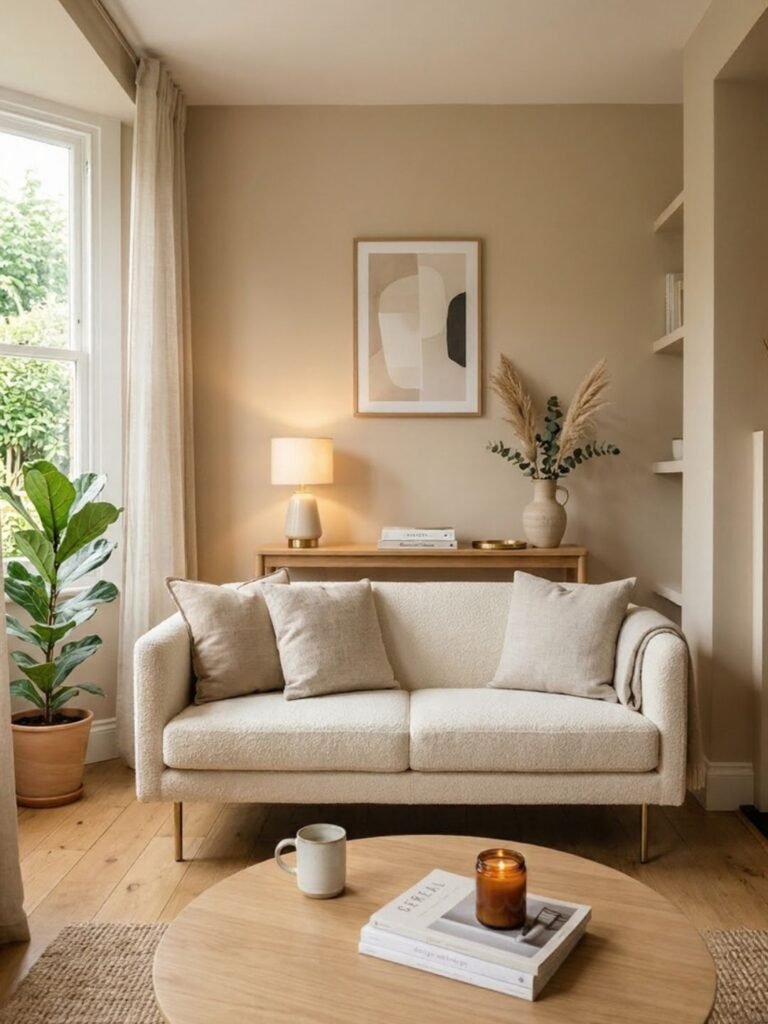
Replace the Traditional Coffee Table With a Round One

If your narrow living room constantly feels like you’re walking around obstacles, look at the coffee table first.

Rectangular coffee tables can reinforce the long geometry of a narrow room.

A round or oval table breaks that visual pattern.

There is also a practical advantage.

With fewer sharp corners, movement around the seating area can feel easier.

A round table doesn’t magically create more square footage, but it can make the available space feel less obstructed.

Best for

Very narrow rooms where circulation around the coffee table is difficult.

Budget Option

You don’t need an expensive designer table.

Look for a simple:

  • round wood table
  • pedestal table
  • nesting table
  • small upholstered ottoman

Choose This When

Your current rectangular table makes the center of the room feel crowded.

Avoid When

Your room is long but actually quite wide. In that case, a rectangular table may provide better visual balance.

Steal This Look

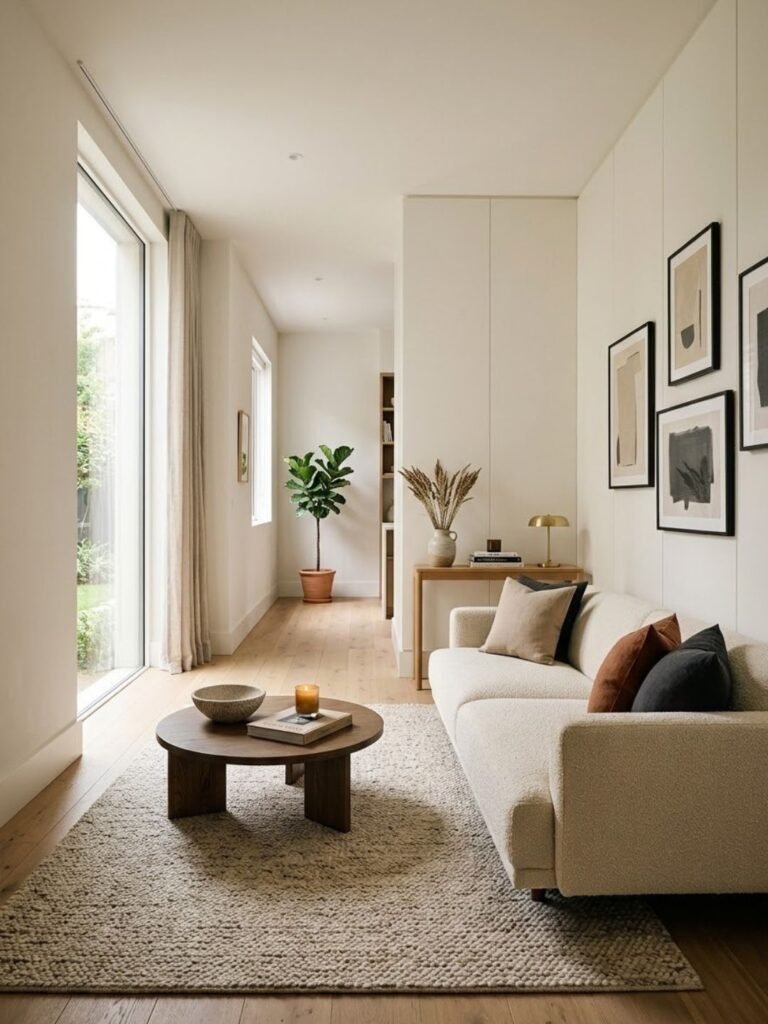
Try a round coffee table centered on a rectangular rug.

The contrast between the two shapes creates visual interest without adding clutter.

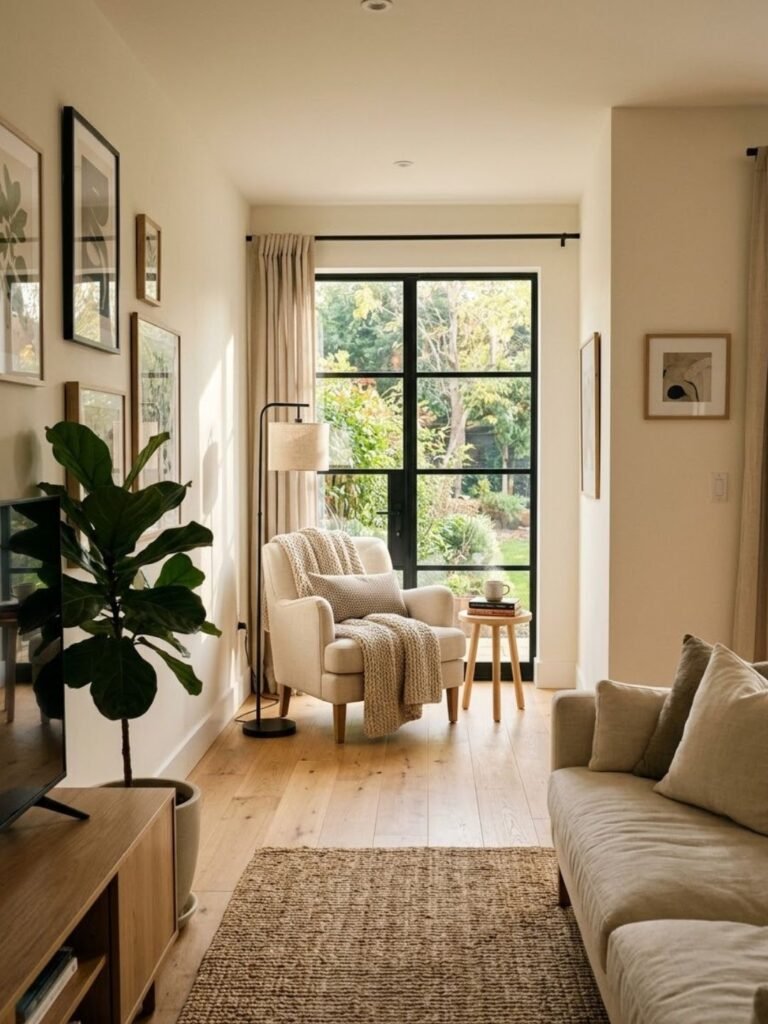
Create a Reading Nook at the End of the Room

The far end of a narrow living room is often wasted.

Instead of filling it with random furniture, turn it into a destination.

A small reading nook can give the room a reason to extend visually from one end to the other.

Place a compact chair near a window, add a small side table and a floor lamp, and suddenly the end of the room becomes purposeful.

This is especially effective when the window provides natural light.

Best for

Long living rooms with an unused window-side area.

Choose This When

You want a second functional zone without adding a second sofa.

Best Size for a Compact Room

A small lounge chair and compact side table can often create a useful nook without requiring a huge footprint.

Avoid When

The proposed reading area would interfere with a doorway or primary walking route.

Steal This Look

Use:

  • Bouclé or linen chair
  • Tiny round side table
  • Slim floor lamp
  • Small framed artwork
  • Soft throw

Keep the palette consistent with the main seating area.

Use One Large Rug Instead of Several Small Rugs

Here’s a surprisingly powerful trick, don’t chop your narrow room into too many visual pieces.

Multiple small rugs can create separate visual islands.

A single appropriately sized rug can visually connect the seating area.

Ideally, at least the front legs of major seating pieces should relate to the rug rather than appearing completely disconnected from it.

Best for

Open-plan or long narrow living rooms where the seating arrangement feels fragmented.

Budget Option

If a large premium rug is expensive, look for a simple low-pile rug in a neutral tone. The visual continuity matters more than an elaborate pattern.

Avoid When

Your room already has several strong patterns. A heavily patterned oversized rug may make the space feel visually busy.

Expert Tip

For narrow rooms, consider subtle linear textures carefully.

Very strong horizontal or vertical patterns can exaggerate the room’s existing geometry.

Steal This Look

Choose a large:

cream + beige textured rug + simple furniture + one darker accent

The room immediately feels calmer.

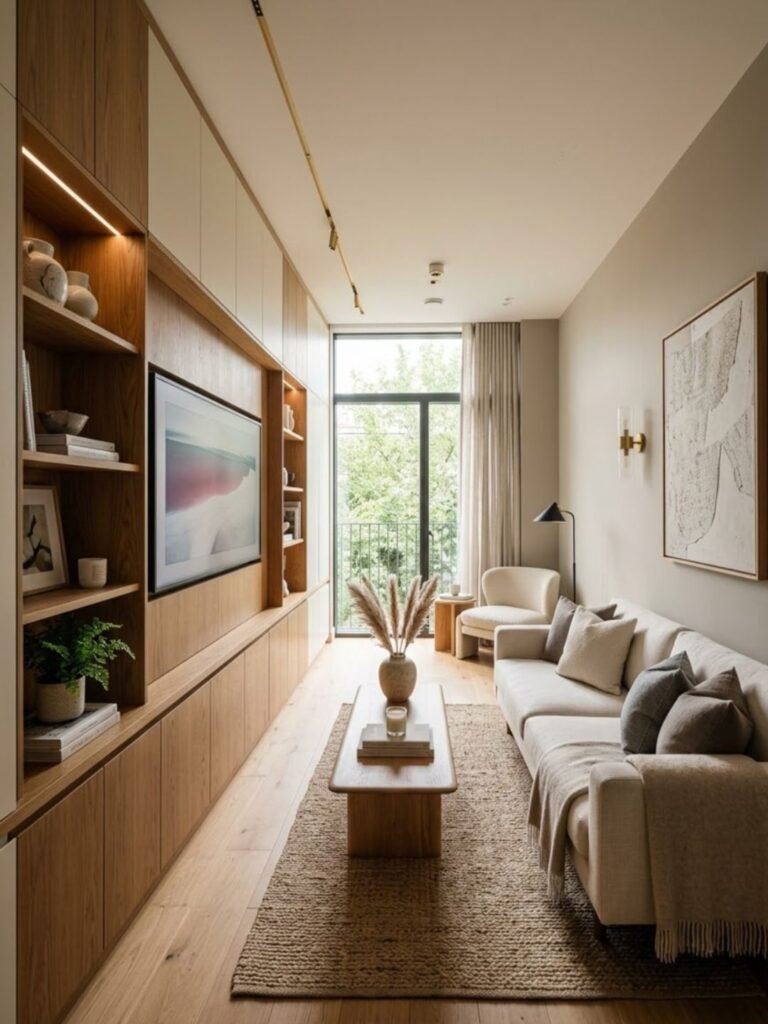
Turn the Long Wall Into a Built-In Storage Feature

Storage is usually where narrow rooms become difficult.

You need cabinets, books, electronics and everyday objects but freestanding storage can make the room feel even tighter.

A built-in wall can solve both problems.

Rather than scattering storage around the room, concentrate it along one wall.

This creates a cleaner visual field.

A built-in can combine:

  • closed cabinets
  • open shelving
  • TV
  • books
  • decorative objects

Best for

Homeowners planning a longer-term renovation.

Budget Option

Use modular storage pieces with matching finishes instead of commissioning a custom built-in.

Choose This When

Your narrow room suffers from visible clutter.

Avoid When

You’re renting or expect to move soon.

Steal This Look

Use floor-to-ceiling cabinetry in a calm wall color and keep most storage closed.

Display only your favorite objects.

Storage should reduce visual noise, not become the room’s main decoration.

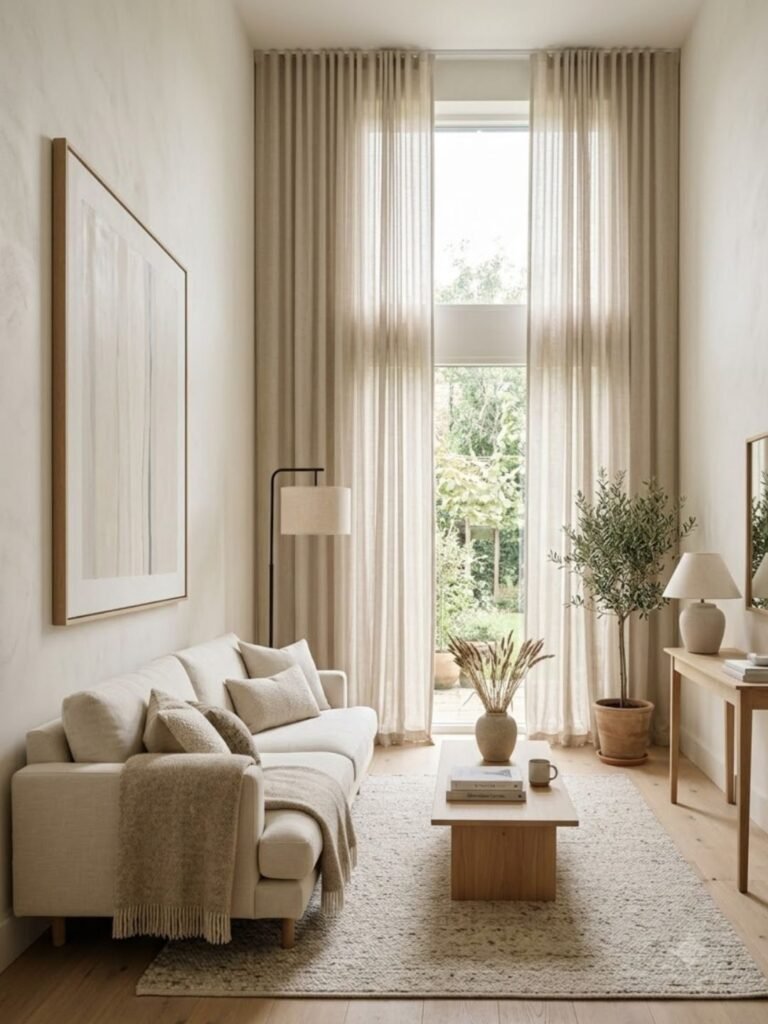
Use Vertical Design to Take Attention Off the Narrow Width

When a room is narrow, don’t spend all your decorating energy emphasizing horizontal space.

Instead, use vertical elements.

Think:

  • tall curtains
  • vertical artwork
  • tall bookcases
  • floor lamps
  • high shelving
  • tall plants

Curtains are especially effective.

Mounting the curtain rod higher than the window frame can make the room feel taller, provided the architecture allows it.

Best for

Low-ceilinged narrow rooms that feel compressed.

Choose This When

You want to change the room’s proportions visually without remodeling.

Budget Option

Start with full-length curtains and one tall floor lamp.

Those two changes alone can create more vertical emphasis.

Avoid When

The room already contains too many tall objects competing for attention.

Steal This Look

Use: ceiling-height curtains + tall artwork + low furniture

The contrast creates an elegant sense of height.

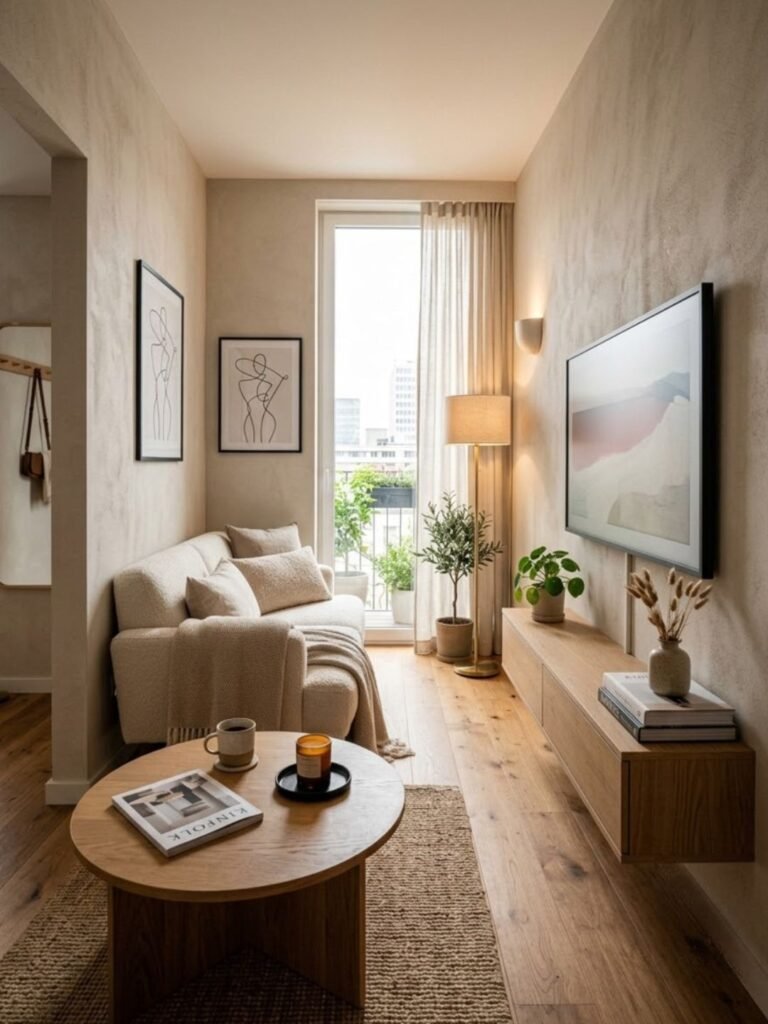
Choose a Wall-Mounted TV to Free Up Floor Space

TV furniture can consume surprisingly valuable floor area.

In a narrow room, a bulky entertainment unit may become a major obstacle.

Wall-mounting the TV can help simplify the arrangement.

If you need storage underneath, choose a shallow floating cabinet instead of a deep freestanding console.

The result is a visually lighter wall.

Best for

Entertainment-focused living rooms where floor space is limited.

Choose This When

Your existing TV unit feels disproportionately deep.

Budget Option

Keep your existing TV and replace only the bulky console with a shallow wall-mounted shelf or cabinet if appropriate.

Avoid When

Wall-mounting isn’t suitable for your wall construction or rental situation.

Steal This Look

Use a simple:

wall-mounted TV + floating cabinet + one artwork or plant

Avoid filling the entire TV wall with accessories.

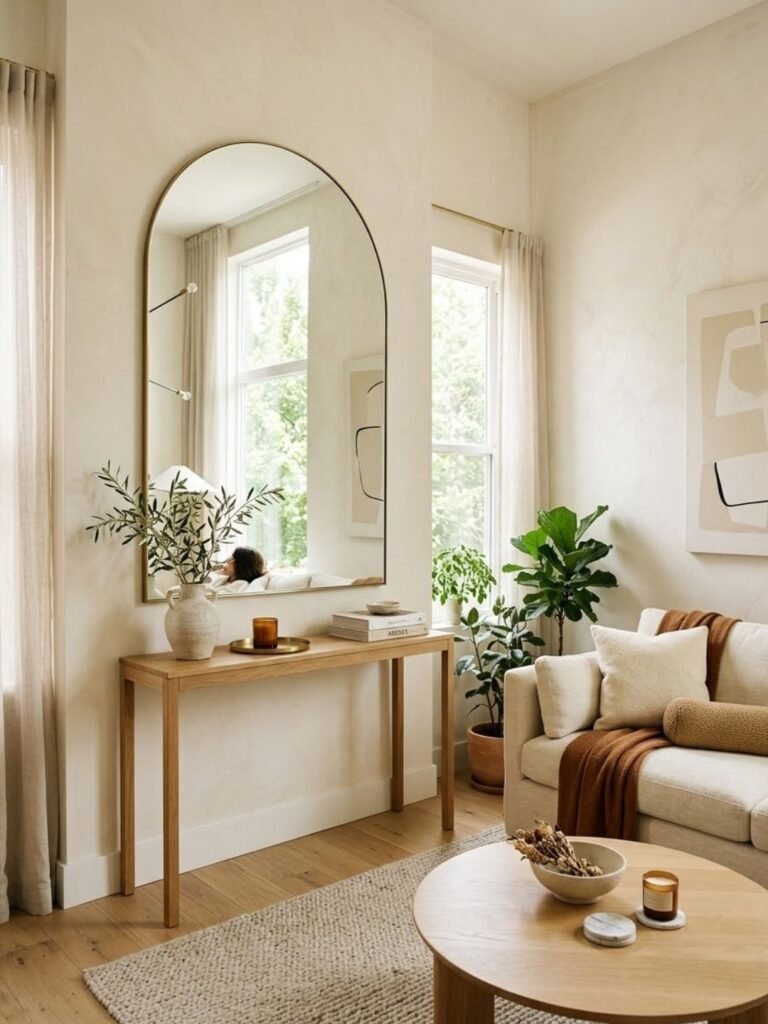
Use a Mirror Where It Actually Helps

Mirrors are often recommended for small rooms with the promise that they will “make the room look bigger.”

That’s only partly true.

A mirror doesn’t physically expand the room.

What it can do is reflect light, views and visual depth.

Placement matters more than simply buying the biggest mirror you can find.

A mirror opposite or near a useful light source can increase brightness and create depth.

Best for

Dark narrow rooms or rooms with limited natural light.

Choose This When

You have an attractive window, light fixture or architectural feature worth reflecting.

Avoid When

The mirror would reflect clutter, a messy storage area or an unattractive wall.

Budget Option

Use one large inexpensive framed mirror instead of a gallery of small mirrors.

Steal This Look

Position a tall mirror behind a slim console.

This creates a layered vignette without taking much floor space.

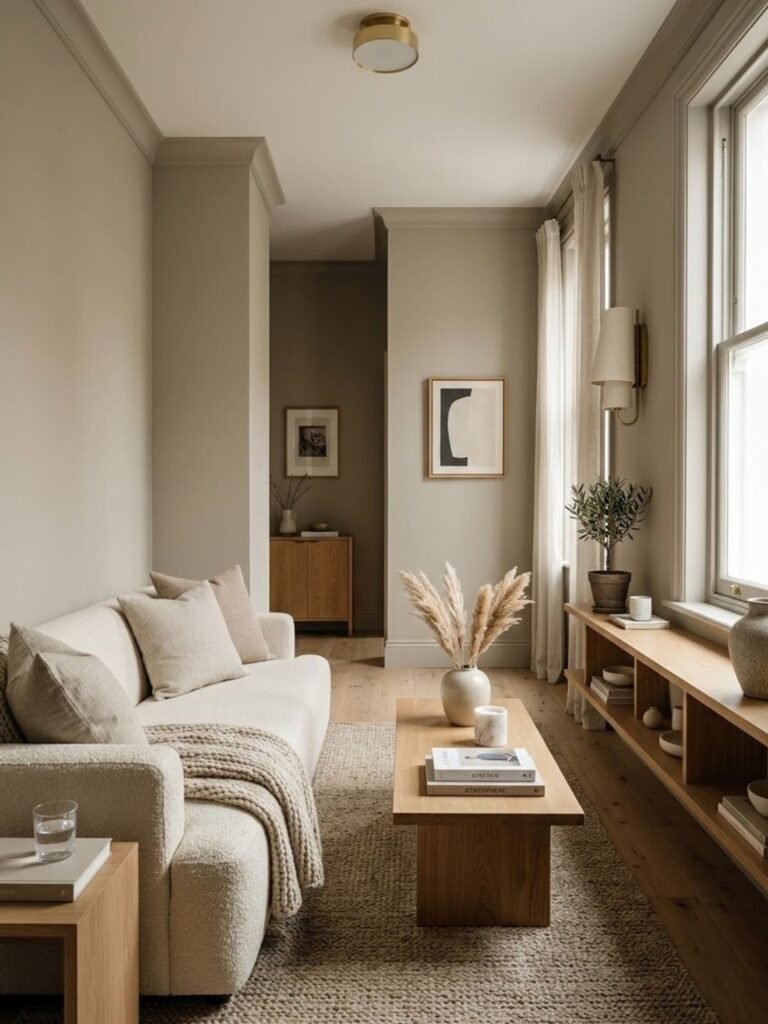
Paint the Walls and Trim in Similar Tones

Color can either calm a narrow room or make its boundaries feel more obvious.

One sophisticated approach is to use similar tones across the walls, trim and major architectural elements.

Instead of creating strong visual borders everywhere, similar tones allow architectural elements to visually blend.

This is particularly effective when the room already has multiple doors or openings.

Best for

Narrow rooms with lots of architectural interruptions.

Budget Option

Paint is one of the cheapest ways to change the overall visual character of a room.

Choose This When

You want the room to feel calm and cohesive.

Avoid When

You genuinely love high-contrast color blocking. Good design doesn’t require every narrow room to be pale.

Expert Tip

Dark colors aren’t automatically forbidden in small rooms.

A deep, cohesive color can create a cozy, enveloping atmosphere.

The key is intentionality.

Create Two Zones Instead of One Long Furniture Line

A long narrow room doesn’t have to become one continuous sofa-and-coffee-table arrangement.

If the dimensions allow, create two smaller zones.

For example:

Zone 1: main conversation area
Zone 2: reading, desk or occasional seating

This prevents the room from visually reading as one long corridor.

Best for

Long rooms where the distance between doors and windows creates unused space.

Choose This When

You have enough length to establish two genuinely useful zones.

Avoid When

The room is too short to create comfortable separation.

Budget Option

Use a rug and lighting rather than buying lots of new furniture.

A floor lamp and small chair can define an additional zone surprisingly well.

Steal This Look

  • Main zone: sofa + coffee table + rug
  • Secondary zone: accent chair + side table + floor lamp

Keep both areas connected through the same color palette.

Use a Narrow Console Behind the Sofa

A narrow console can solve several design problems at once.

It gives you a place for:

  • lamps
  • books
  • small decor
  • keys
  • baskets

And if the sofa is floating, it makes the back of the sofa look intentional.

The important word is narrow.

You don’t want a deep cabinet stealing the circulation space you’re trying to protect.

Best for

Floating sofa arrangements.

Budget Option

A simple slim console shelf can provide the same visual function as an expensive designer piece.

Avoid When

There isn’t enough clearance behind the sofa.

Steal This Look

Style the console with:

  • one table lamp
  • one small artwork
  • one ceramic object
  • one basket

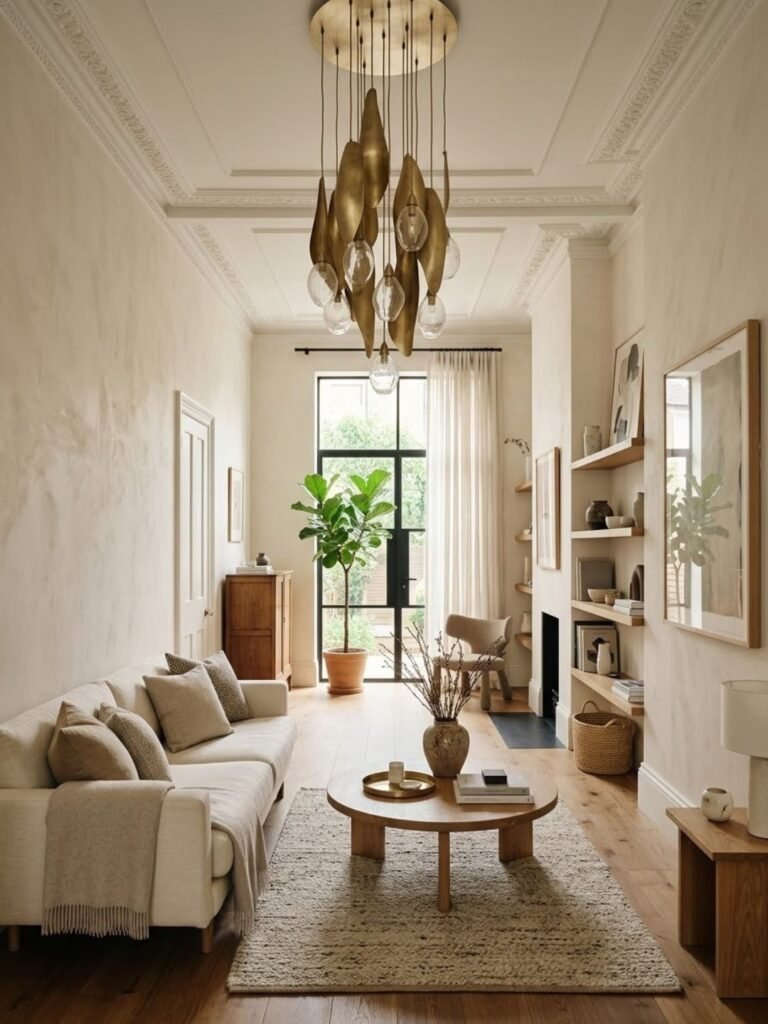
Make the Ceiling the Unexpected Feature

Here’s where you can really make a narrow living room memorable.

Instead of putting all your design energy on the walls, look up.

A statement ceiling can pull attention upward and make the room feel more architectural.

Depending on your home, this could mean:

  • subtle ceiling beams
  • wood slats
  • wallpaper
  • architectural molding
  • a sculptural pendant

The trick is restraint.

You want the ceiling to create interest—not visually lower the room.

Best for

Homeowners who want something more distinctive than a standard neutral living room.

Choose This When

Your walls are already relatively simple.

Avoid When

Your ceiling is already low and the proposed treatment would make it visually heavier.

Budget Option

A dramatic pendant light can create a similar focal effect without remodeling the entire ceiling.

Steal This Look

Keep the walls simple and let one sculptural pendant become the focal point.

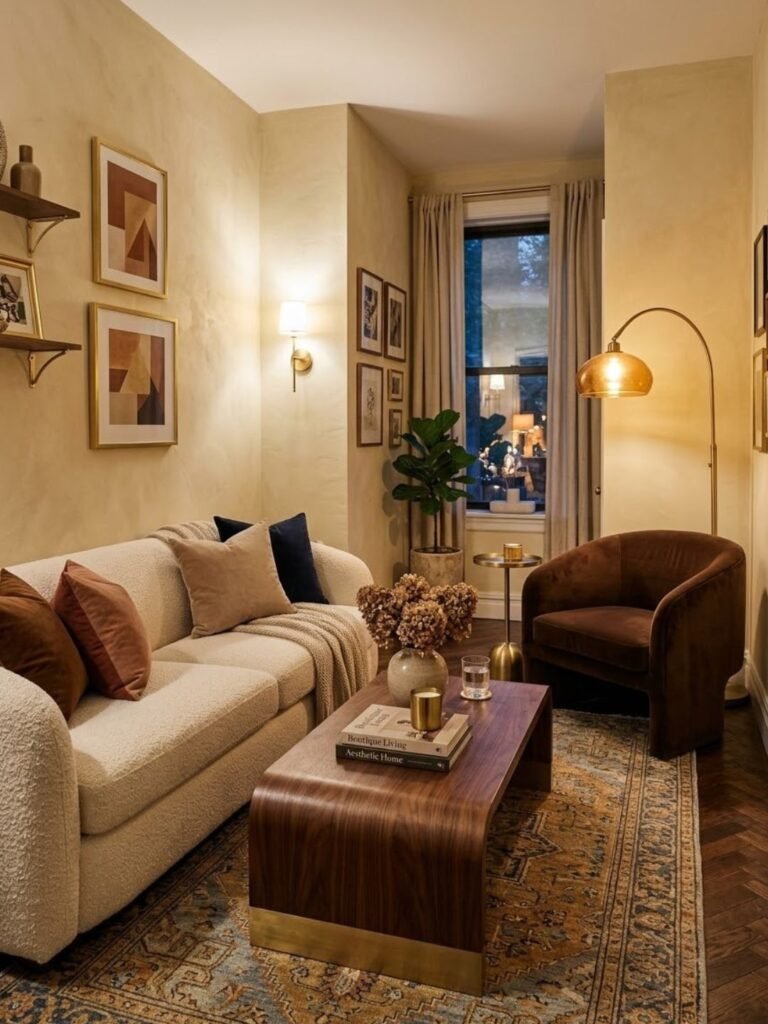
Embrace the Narrowness With a Cozy Boutique-Hotel Look

Not every narrow living room needs to pretend it’s a giant open-plan space.

Sometimes the smartest approach is to embrace the proportions.

Instead of trying to make the room look enormous, make it feel intimate and luxurious.

Think:

  • rich textures
  • layered lighting
  • warm colors
  • tailored furniture
  • beautiful artwork
  • luxurious fabrics

The result can feel intentional rather than cramped.

This is especially effective in evening-focused living rooms where coziness is more important than maximum visual openness.

Best for

People who prefer warm, sophisticated interiors over ultra-minimal spaces.

Choose This When

Your room naturally feels intimate and you don’t want to fight its proportions.

Avoid When

You need the room to function as a high-traffic multipurpose space.

Budget Option

Focus on textiles and lighting first.

A textured throw, floor lamp, curtains and cushions can dramatically change the atmosphere without replacing your furniture.

Steal This Look

Use:

warm beige walls + chocolate accent + cream sofa + brass lighting + textured rug

The narrow room becomes a feature rather than a problem.

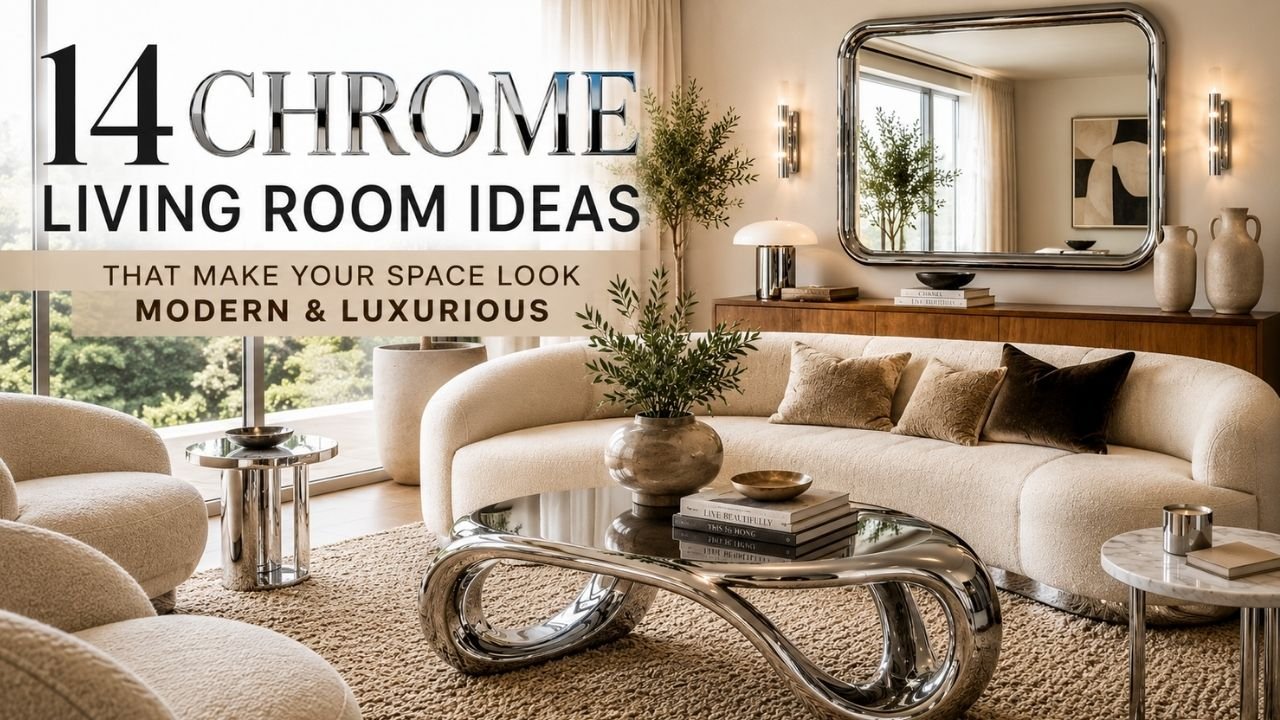
Read also: 14 Chrome Living Room Ideas

How to Arrange Furniture in a Narrow Living Room

Before you buy anything, start with the room’s circulation.

A simple arrangement often works better than trying to fill every available inch.

Step 1: Identify the Main Walking Route

Look at how people enter and leave the room.

That path should remain visually and physically clear.

Step 2: Pick the Largest Piece First

Usually, this is the sofa.

Don’t begin with accessories.

Choose the sofa based on:

  • room width
  • desired seating
  • door clearance
  • walkway
  • visual weight

Step 3: Add the Rug

The rug should connect the seating rather than float randomly in the center.

Step 4: Add the Coffee Table

Only after the sofa and rug are positioned should you decide whether a coffee table actually fits.

Step 5: Add Secondary Seating

Use chairs strategically rather than automatically adding matching furniture.

Step 6: Add Storage Last

This sounds counterintuitive, but it prevents storage from dictating the entire room.

Furniture Mistakes That Make Narrow Living Rooms Feel Even Smaller

Even a beautiful room can fail if the proportions aren’t right.

Oversized Sectionals

Large L-shaped sofas can dominate narrow rooms.

They aren’t always wrong, but they need sufficient width and circulation.

Deep Coffee Tables

A coffee table that projects too far into the walkway can make the room feel blocked.

Too Many Small Pieces

Ironically, lots of tiny furniture can make a room feel more cluttered than a few substantial pieces.

Furniture Blocking Windows

Natural light is valuable.

Don’t sacrifice it just to squeeze in another chair.

Excessive Wall Decor

A narrow room already has strong architectural lines.

Too many small frames can create visual noise.

What Colors Work Best in a Narrow Living Room?

There’s no single “correct” palette.

But certain approaches are particularly effective.

Warm Neutrals

Think:

  • ivory
  • cream
  • beige
  • greige
  • warm white

These create a soft, continuous background.

Monochromatic Color

Using several shades of one color can make the room feel cohesive.

Dark and Moody

Don’t automatically reject dark colors.

A deep green, navy or brown can create a sophisticated, intimate room when balanced with lighting and texture.

The Better Rule

Instead of asking:

“What color makes my room look bigger?”

Ask:

“What color helps my room feel cohesive?”

That’s usually a more useful design question.

Small Narrow Living Room Ideas on a Budget

You don’t need a complete renovation.

Start with the elements that influence the room most.

Under a Small Budget

Try:

  • moving furniture
  • removing unnecessary pieces
  • changing curtain height
  • adding one large mirror
  • replacing a bulky coffee table
  • decluttering shelves
  • rearranging artwork

Medium Budget

Consider:

  • new rug
  • slim console
  • compact accent chair
  • better lighting
  • floating media storage

Larger Budget

Consider:

  • built-in storage
  • custom furniture
  • architectural lighting
  • flooring changes
  • built-in seating

The best investment is usually the thing that solves the biggest functional problem.

The Designer’s Formula for a Narrow Living Room

If you are overwhelmed by choices, start here:

1 sofa

  • 1–2 lightweight chairs
  • 1 large rug
  • 1 appropriately sized coffee table
  • 1 focal point
  • 1 storage solution
  • layered lighting

Then stop adding things until the room proves it needs them.

This is especially important in compact spaces.

Empty space isn’t wasted space.

Empty space is what allows the furniture you love to actually be seen.

Frequently Asked Questions

What sofa is best for a narrow living room?

A slim or moderate-depth sofa is generally easier to work with than an oversized sectional. Look for furniture that provides enough seating without consuming too much floor depth.

Should a narrow living room have a coffee table?

Not necessarily. If a coffee table obstructs circulation, consider a small round table, nesting tables or an ottoman.

Should furniture touch the walls in a narrow living room?

Not always. Some narrow rooms benefit from floating a sofa slightly away from the wall, but only when there is sufficient space for comfortable circulation.

Is a sectional good for a long narrow living room?

It depends on the width. A large sectional can overwhelm a very narrow room. If you want sectional seating, look for a compact design with appropriate depth.

Where should the TV go in a narrow living room?

Usually on a wall that allows comfortable viewing without creating a major circulation obstruction. A wall-mounted TV paired with shallow storage can save valuable floor space.

What size rug should I use in a narrow living room?

Choose a rug large enough to visually connect the main seating pieces. Measure your furniture arrangement first rather than selecting a rug based solely on room dimensions.

Final Thoughts

The biggest mistake you can make with a narrow living room is treating its proportions as something you have to hide.

Instead, design around them.

Choose furniture that respects the room’s width. Protect the walking path. Use shape strategically. Give storage a clear home. Draw attention upward when appropriate. And don’t underestimate the power of a simple, cohesive palette.

Most importantly, don’t fill the room simply because you have space left.

A narrow living room often becomes more beautiful when you remove one unnecessary piece than when you add another decorative object.

The goal isn’t to make your living room look like a completely different room.

The goal is to make the room you already have work brilliantly.

Leave a Comment