Designing a toddler bedroom is about much more than choosing cute furniture and colorful decorations. At this age, a bedroom needs to do several jobs at once, it should feel comforting at bedtime, provide opportunities for independent play, remain easy for parents to organize, and adapt as your child grows.
A room that looks wonderful in a photograph but has nowhere to store toys can quickly become frustrating. Likewise, an adorable theme can feel outdated within a couple of years. The smartest approach is to create a flexible foundation and then add personality through details that can be changed easily.
Whether you have a spacious nursery that is becoming a toddler room or a compact bedroom that needs careful planning, these 14 toddler bedroom ideas will help you create a space that feels cozy, organized, playful, and thoughtfully designed.
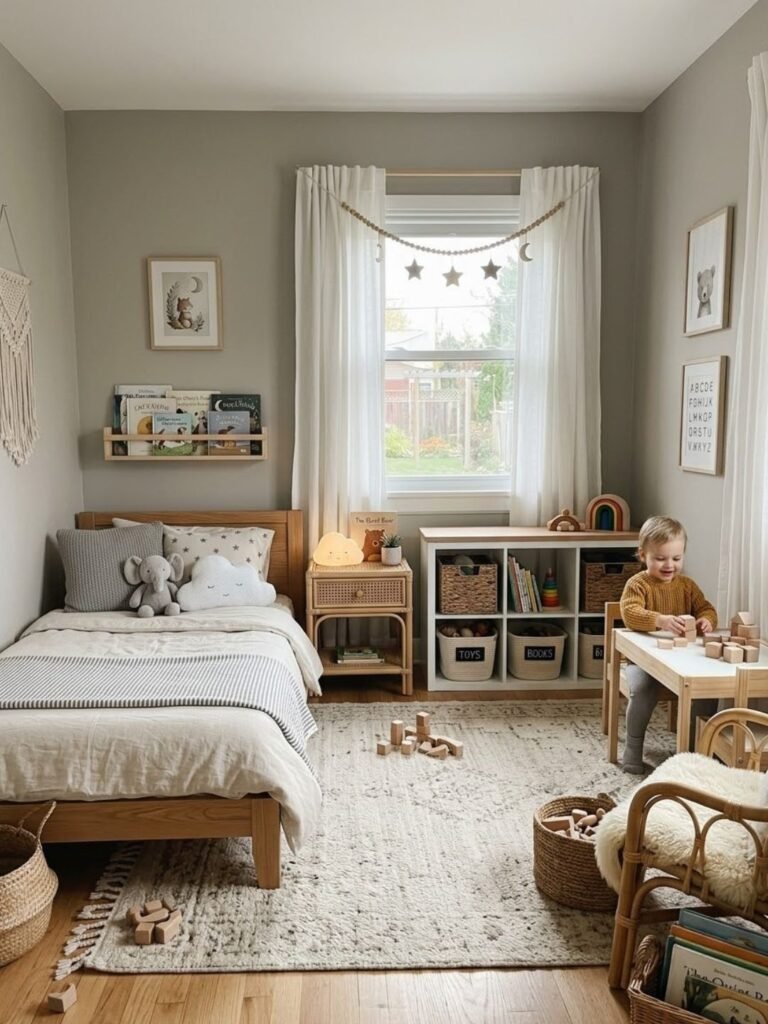
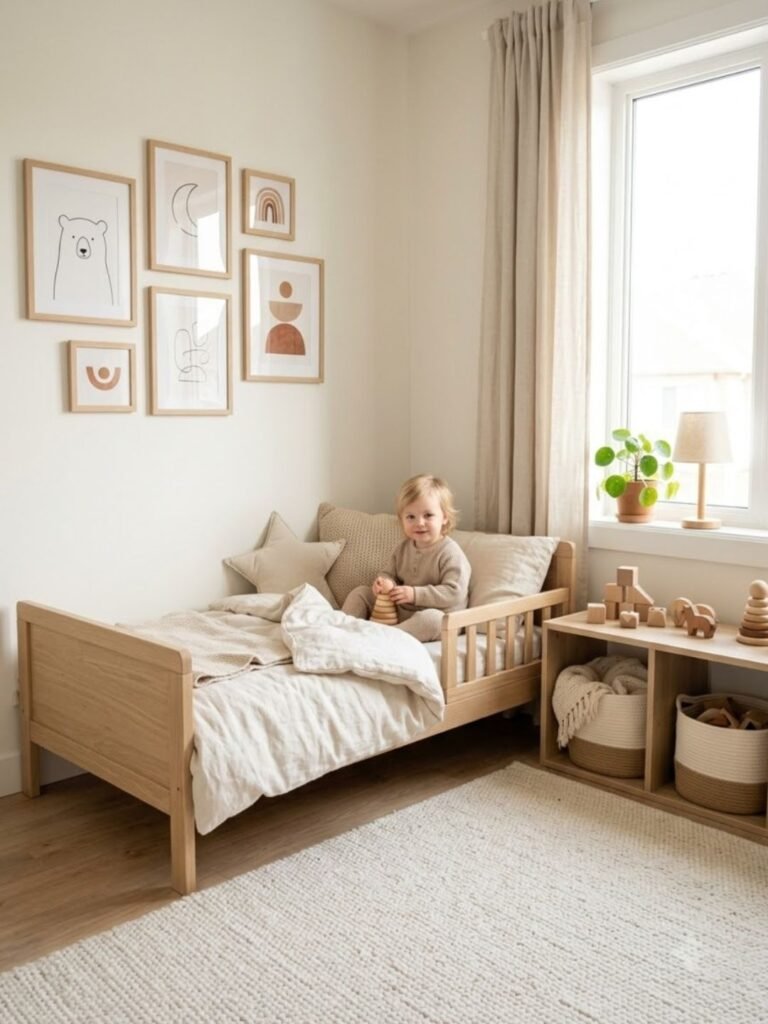
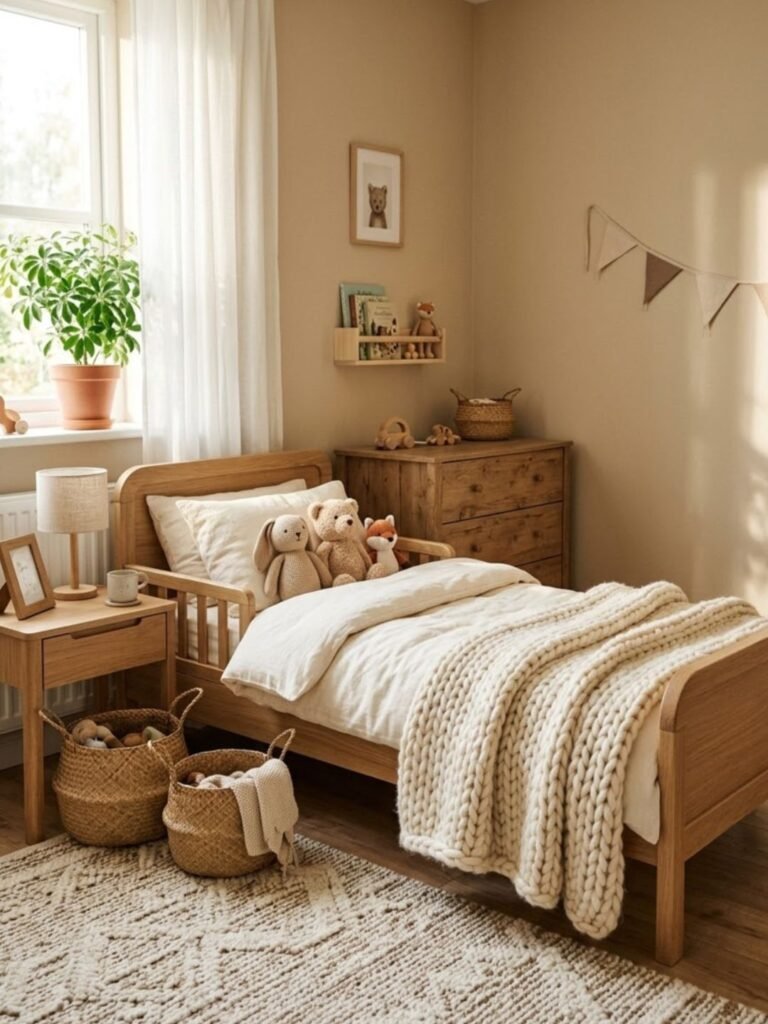
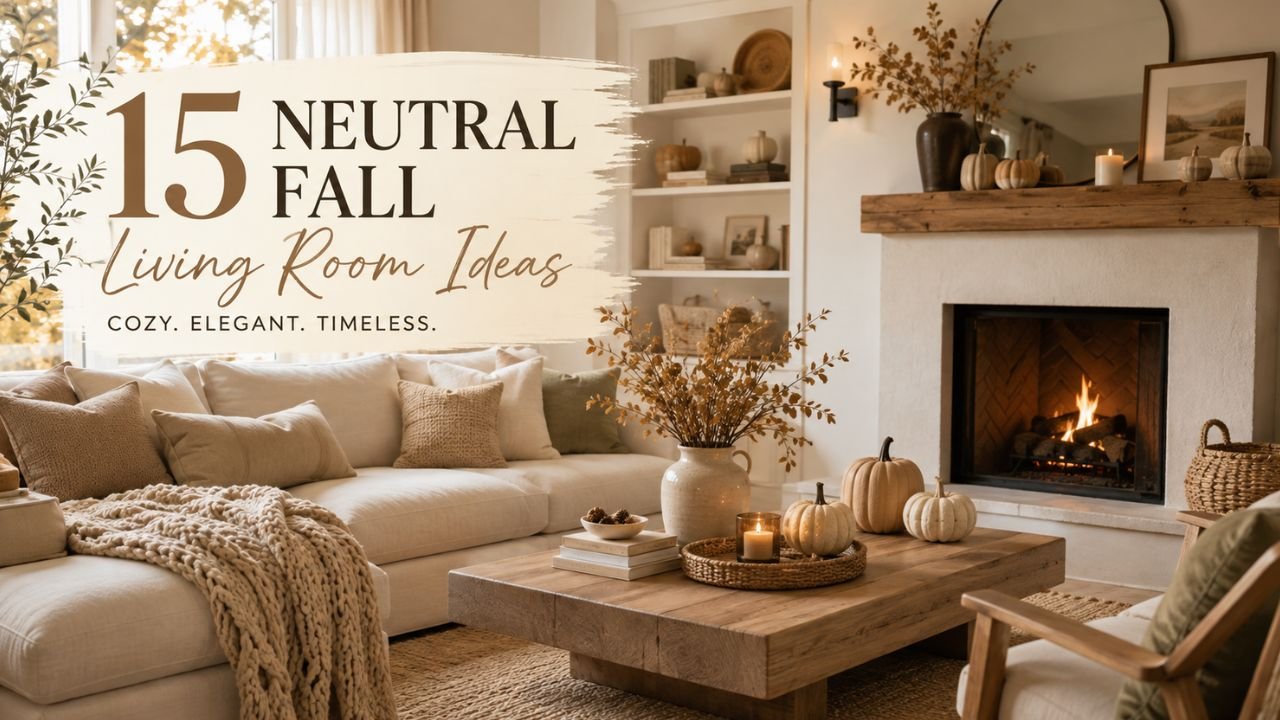
A neutral toddler bedroom is one of the easiest styles to live with because the main furniture can remain useful for years.
Instead of building the room around bright colors or a very specific theme, start with soft shades such as warm white, beige, light taupe, oatmeal, or muted sage. Then introduce personality through artwork, cushions, toys, baskets, rugs, and small decorative pieces.
The result is a bedroom that feels calm without becoming boring.
A neutral base is particularly helpful because toddlers are surrounded by visual stimulation during the day. Keeping the walls and larger furniture relatively quiet can make the bedroom feel more relaxing at night.
Best for
Families who want a timeless bedroom that can evolve as their child gets older.
Choose this when
You’re unsure which theme your toddler will still love in two or three years.
Avoid when
Your child strongly enjoys bold colors and would benefit from a more playful environment. In that case, use neutral furniture but bring stronger colors into removable accessories.
Budget option
Keep your existing furniture and simply refresh the room with a washable rug, inexpensive artwork, fabric storage bins, and a colorful duvet or blanket.
Build a Toddler Montessori-Inspired Bedroom for Independence
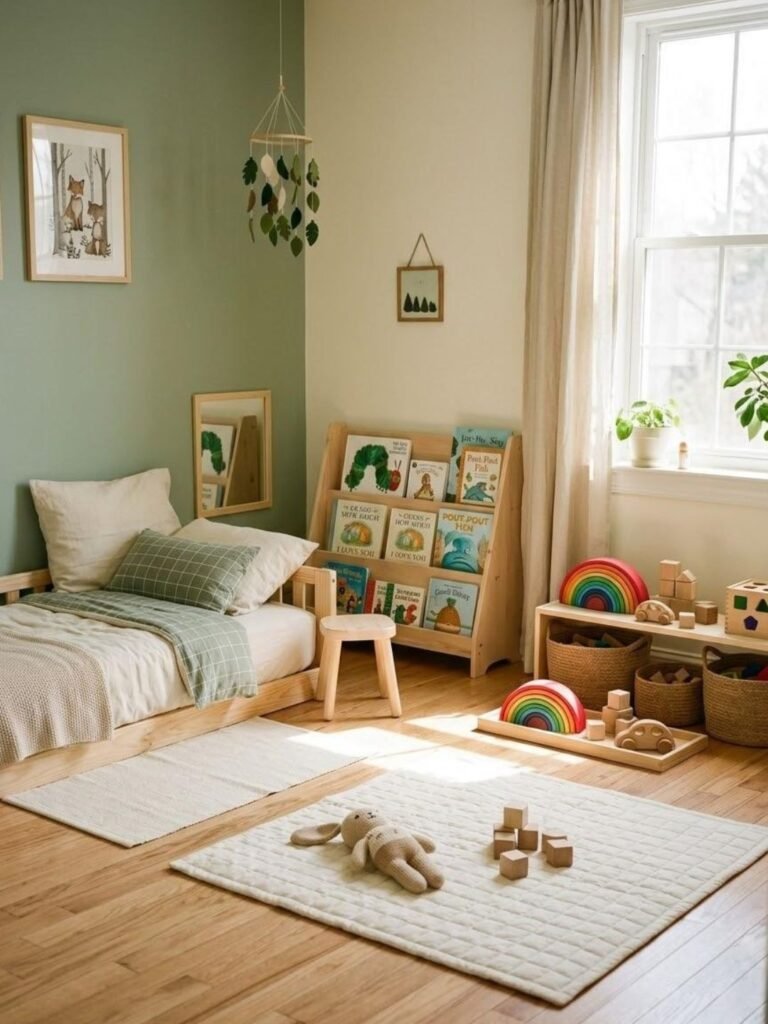
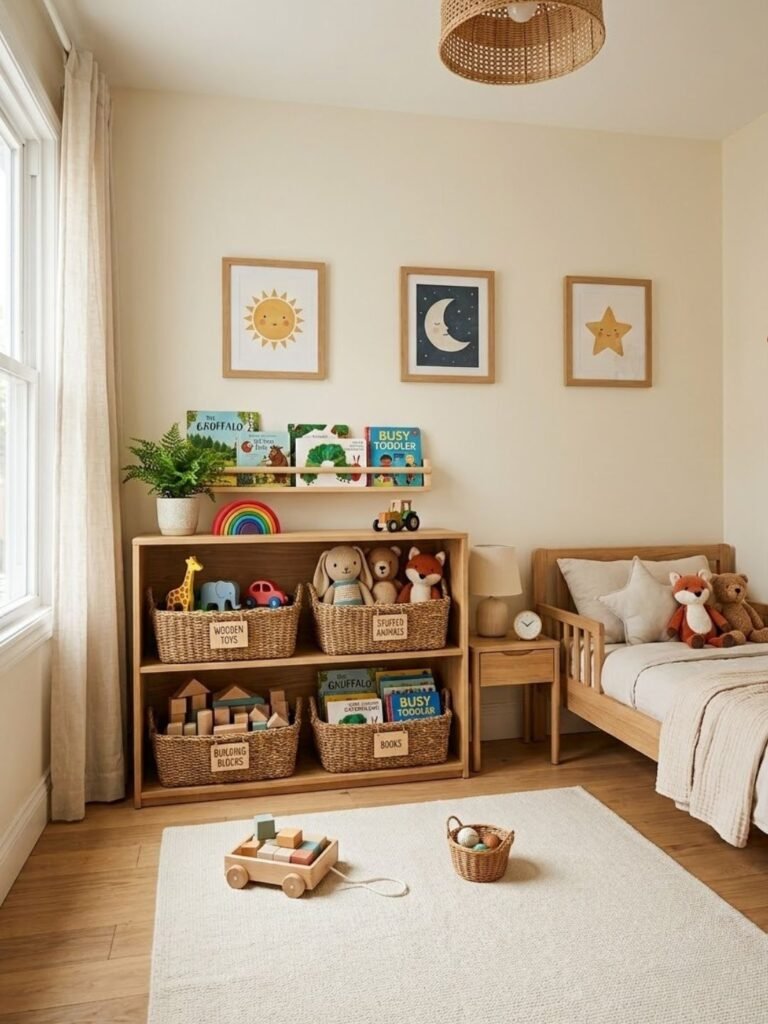
A Montessori-inspired toddler bedroom focuses on accessibility and independence.
Instead of placing everything out of reach, selected items are positioned at a height your child can safely access. A low bed, child-height bookshelf, accessible clothing area, and clearly organized toy storage can encourage toddlers to participate in simple daily routines.
The philosophy is less about copying a particular aesthetic and more about designing the room around the child’s growing independence.
A low bookshelf, for example, can allow a toddler to select a book independently before bedtime.
The key is to avoid filling every available surface. Too many accessible objects can quickly become overwhelming.
Best for
Toddlers who are becoming interested in choosing their books, toys, clothes, and bedtime routines independently.
Choose this when
You want the bedroom to encourage simple age-appropriate independence.
Avoid when
The room cannot accommodate safe, stable furniture with enough clear floor space.
Budget option
You don’t need expensive Montessori furniture. A sturdy low shelf, accessible baskets, and an appropriately designed toddler bed can create the same practical feel.
Safety note
Anchor suitable furniture securely and keep inaccessible or hazardous items out of reach. The room should always be adapted to your child’s specific age and abilities.
Steal This Look
Pair a low wooden bed with a small forward-facing book ledge, two or three soft storage baskets, a simple floor mat, and a few carefully selected toys.
Turn One Wall Into a Magical Storybook Accent Wall
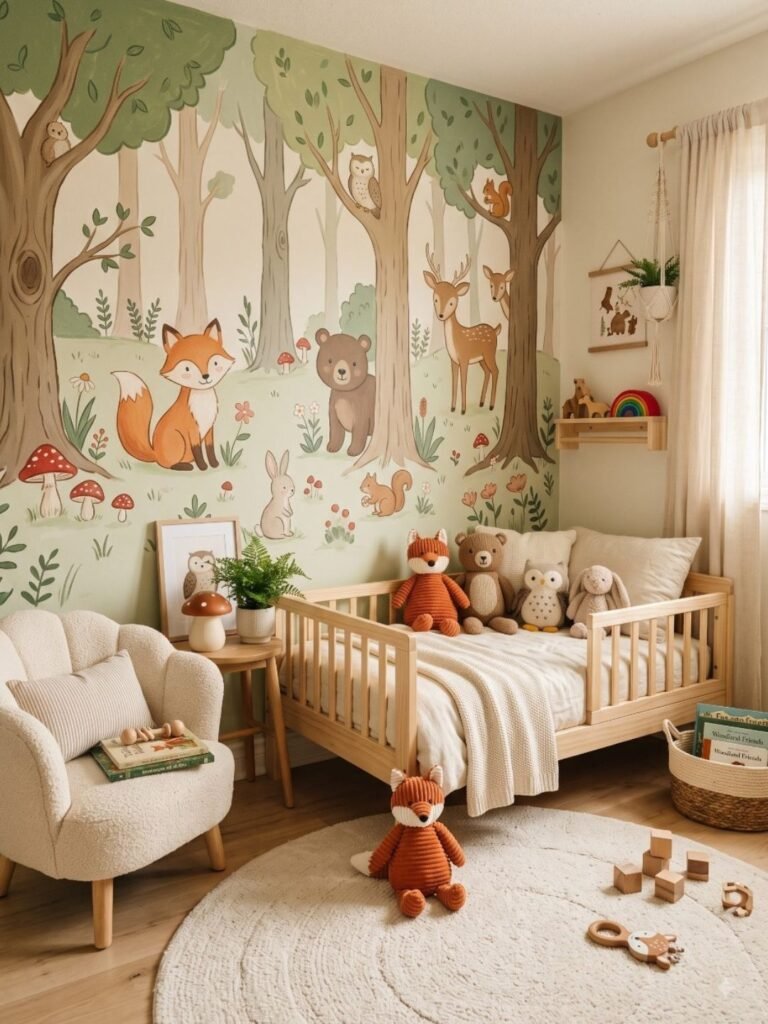
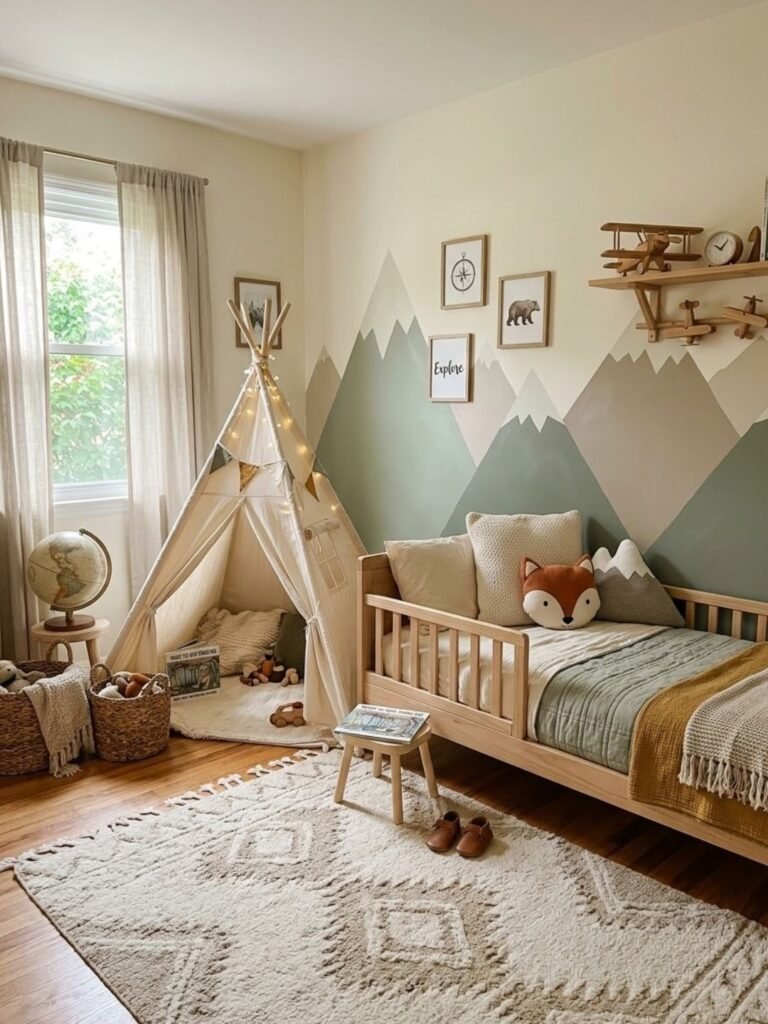
A storybook-inspired accent wall can add personality without forcing you to decorate the entire room around a theme.
Think of woodland animals, clouds, tiny stars, forests, hot-air balloons, or whimsical illustrations rather than highly specific cartoon characters.
This approach creates a room that feels imaginative while remaining sophisticated enough to evolve.
A wallpaper mural can make a dramatic impact, but removable wallpaper or large-scale wall decals are excellent alternatives for renters or families who change their minds frequently.
When using a busy wall treatment, keep the remaining elements simple.
Best for
Parents who want the room to have a strong visual focal point.
Avoid when
The room is very small and already contains lots of furniture and colorful toys. In that situation, a quieter accent wall may work better.
Choose this when
You want an Instagram- or Pinterest-friendly room without purchasing lots of decorative objects.
Steal This Look
Create one illustrated woodland wall, add a simple wooden bed in front of it, use cream bedding, and finish with a small reading chair and oversized plush toys.
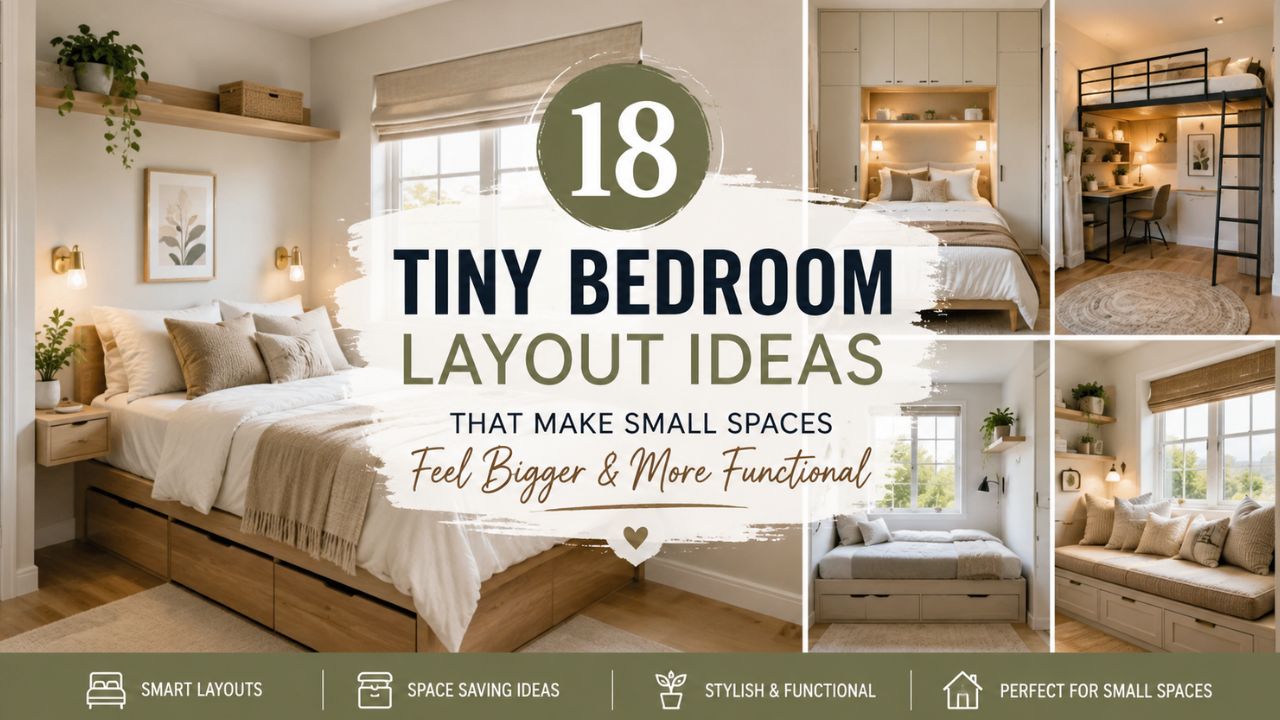
Design a Compact Toddler Bedroom With Smart Storage
Small toddler bedrooms require more planning than large bedrooms.
Instead of trying to squeeze in lots of furniture, think vertically and prioritize pieces that perform multiple functions.
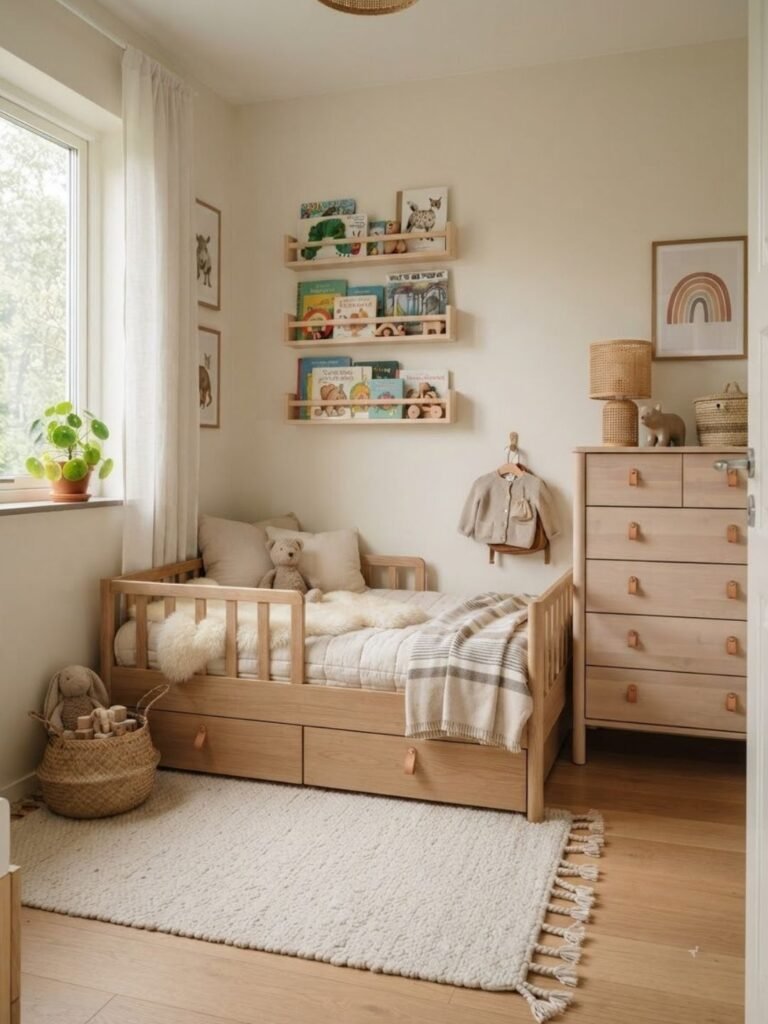
A bed with built-in drawers can store spare bedding or clothing. A narrow bookshelf can replace a bulky cabinet. Wall hooks can keep bags and lightweight accessories off the floor.
Storage should also be visually simple. Too many open shelves can make a small room appear cluttered even when everything is organized.
Closed baskets are particularly useful because they hide visual noise.
Best for a compact room
A narrow bed, slim dresser, wall-mounted shelves, under-bed drawers, and baskets that fit beneath furniture.
Choose this when
Every square foot matters.
Avoid when
You are tempted to fill unused wall space with too many shelves. Vertical storage is useful, but the room still needs breathing space.
Budget option
Use inexpensive fabric bins and stackable organizers instead of replacing the entire furniture set.
Steal This Look
Place the toddler bed against the longest wall, use a slim dresser opposite it, install two narrow picture ledges above the bed, and reserve one corner for a small soft rug.
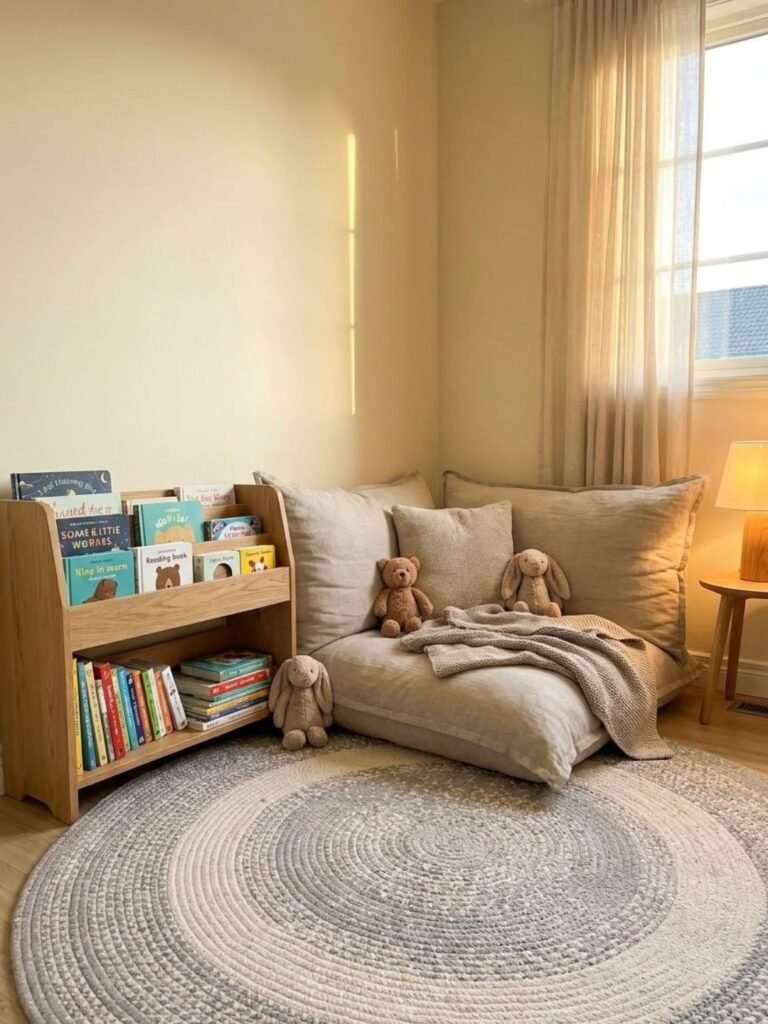
A reading nook can transform an ordinary bedroom into a space that encourages quiet time.
You don’t need an elaborate built-in structure. A small cushioned chair, floor cushion, soft rug, or miniature canopy can be enough to create a defined reading zone.
Place a small selection of books nearby rather than displaying dozens at once.
The purpose isn’t to create another storage area. It’s to create a visual cue that says: this is the place where we slow down.
Best for
Families who enjoy bedtime reading or quiet afternoon activities.
Choose this when
Your toddler has enough floor area for a small dedicated corner.
Avoid when
Adding a chair would make movement around the bed difficult.
Budget option
Use a comfortable floor cushion and a low basket of books.
Use a Nature Inspired Toddler Bedroom for a Calming Feel
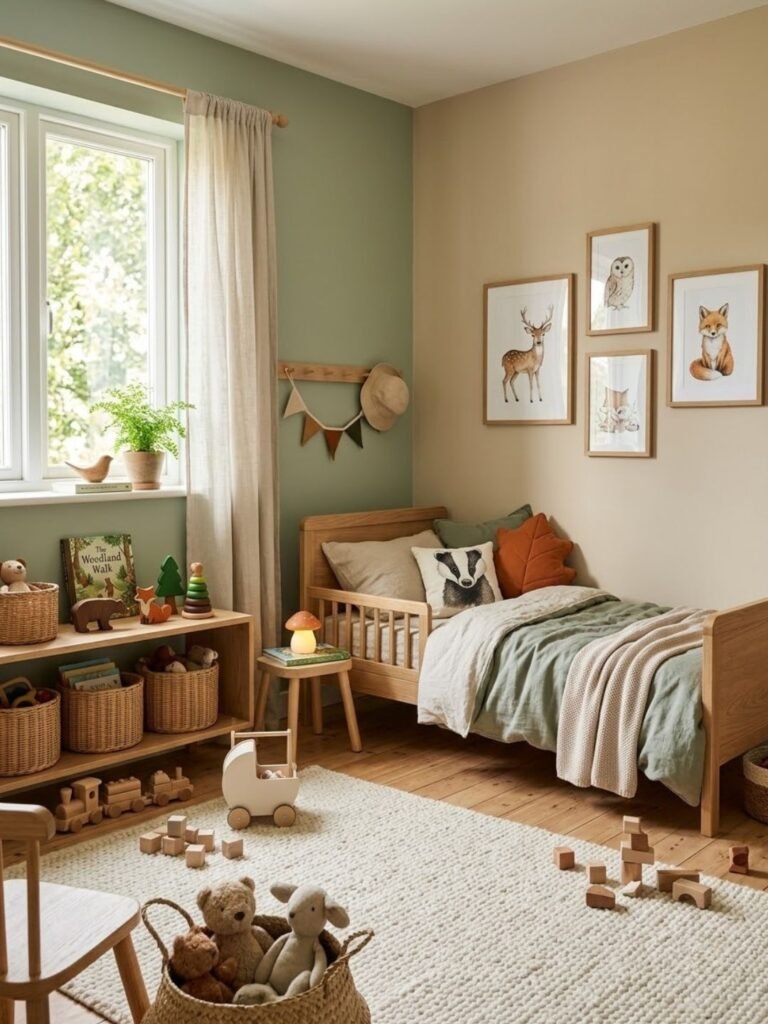
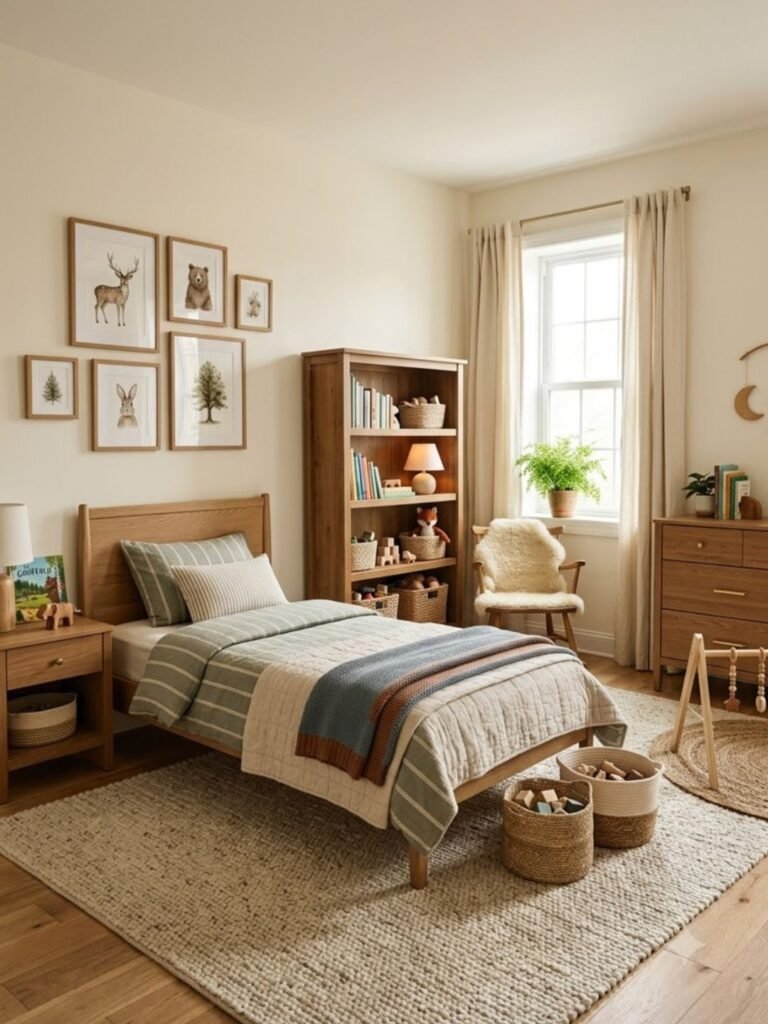
Nature-inspired bedrooms use earthy colors and natural materials to create a relaxed atmosphere.
Sage green, dusty blue, warm beige, clay, cream, and muted brown work particularly well together.
Natural wood furniture, woven baskets, linen-like textiles, botanical artwork, and animal illustrations reinforce the theme without making it feel overly themed.
The trick is restraint.
Rather than adding leaves, animals, flowers, and botanical prints everywhere, select one or two nature-inspired features and allow the rest of the room to remain quiet.
Best for
Parents who prefer organic, timeless interiors.
Avoid when
You want a bright, highly colorful play-focused bedroom.
Budget option
Paint one wall sage green and add inexpensive botanical prints.
Choose this when
You want a theme that can easily transition into a preschool or big-kid bedroom.
Steal This Look
Combine warm beige walls, a natural wood bed, sage bedding, rattan storage baskets, one botanical print, and a small collection of plush forest animals.
Make a Toddler Bedroom Feel Special With a Canopy Bed Corner
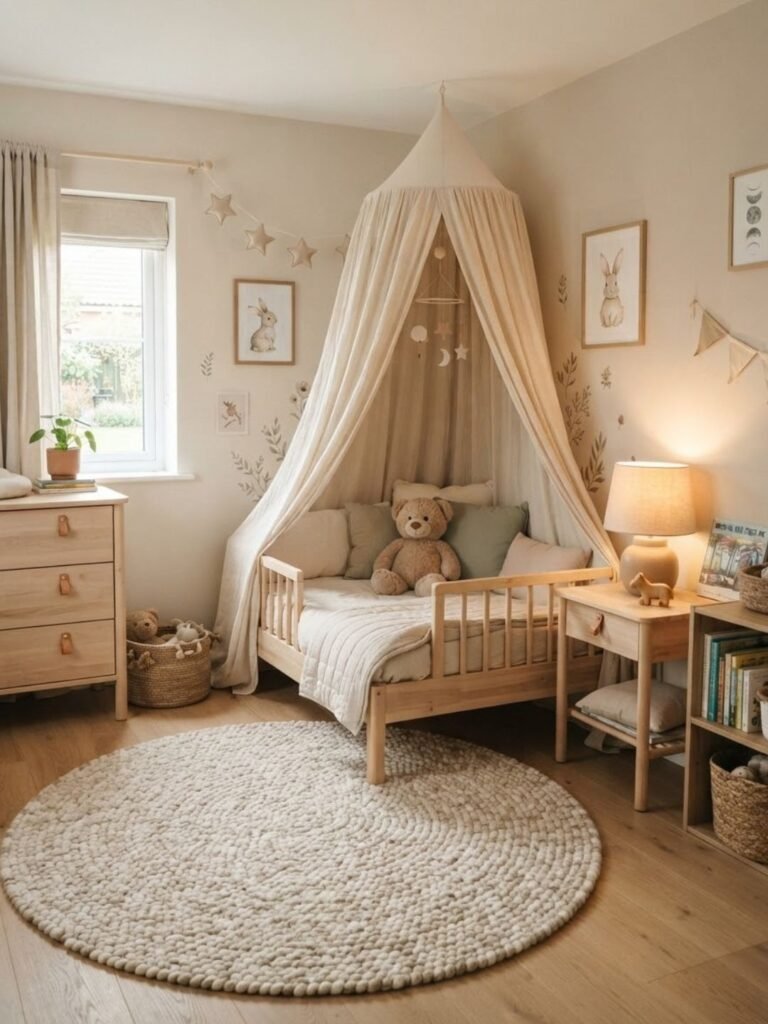
A fabric canopy can instantly make a toddler bedroom feel magical.
It creates a sense of enclosure around the bed or reading space and can become the room’s main decorative feature.
For a softer look, choose light cotton or gauzy-looking fabric in a neutral shade. A pastel or muted accent can also work if it complements the rest of the room.
The important thing is to treat the canopy as an accent rather than filling the room with multiple competing decorations.
Best for
Creating a cozy, dreamy atmosphere.
Avoid when
The bedroom is so small that the canopy makes the bed area feel visually heavy.
Budget option
A simple wall-mounted canopy is often much less expensive than a decorative four-poster bed.
Choose this when
Your toddler enjoys imaginative play and cozy spaces.
Steal This Look
Start with a simple wooden bed, add a neutral fabric canopy behind or above it, then style the surrounding area with one soft rug, a plush toy, and minimal wall art.
A bedroom doesn’t need lots of decorations to feel cozy.
Texture can do much of the work.
Combine a soft rug, knitted blanket, cotton bedding, woven baskets, wood furniture, plush toys, and textured cushions. These elements create visual depth while keeping the color palette simple.
Texture is especially useful in neutral bedrooms where you want warmth without adding lots of bright colors.
Best for
Cold-weather homes, neutral interiors, and cozy bedtime atmospheres.
Avoid when
The room already has too many bulky textiles or is difficult to keep clean.
Budget option
Add one textured rug and one cozy blanket rather than replacing all textiles.
Choose this when
Your room feels visually plain even though the furniture is attractive.
Steal This Look
Start with cream bedding, add a chunky knit blanket, place a soft washable rug beneath the bed, and finish with woven storage baskets.
Design a Toddler Room Around a Fun Toy-Storage System
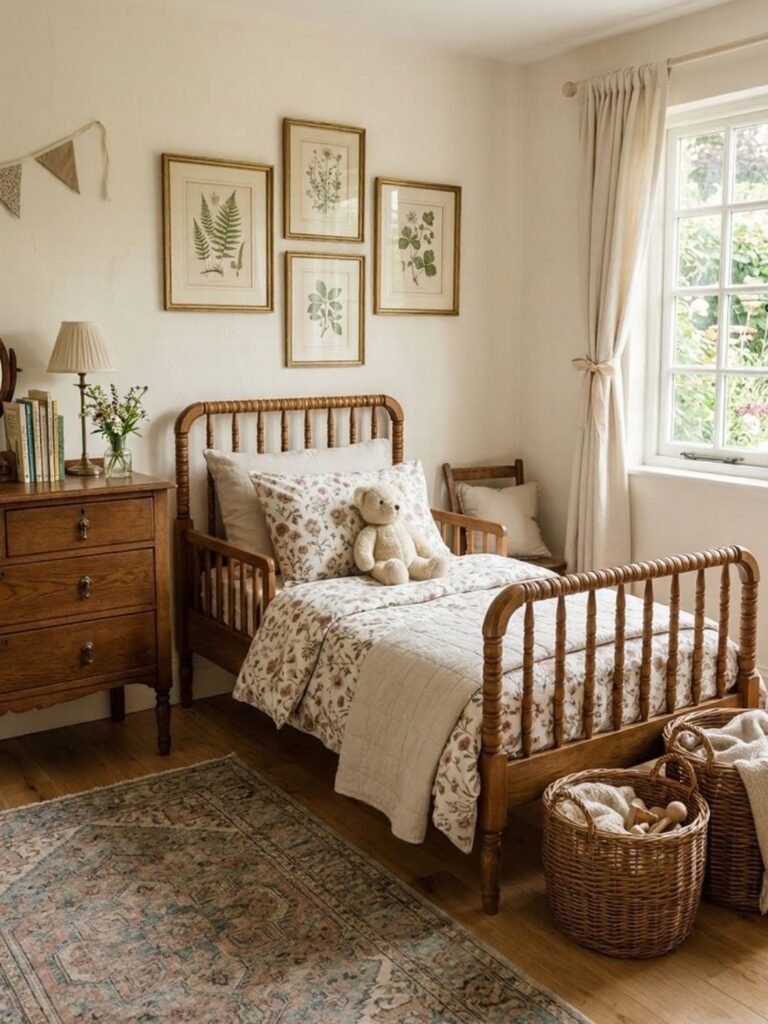
A vintage-inspired toddler room can feel incredibly warm and personal.
The secret is mixing old-fashioned character with modern practicality.
Choose one or two vintage-looking pieces, such as a traditional wooden dresser, brass-look hardware, classic framed artwork, or a soft floral pattern. Then balance them with modern storage, washable textiles, and simple furniture.
This prevents the room from looking like a museum.
Best for
Traditional, cottage, vintage, and classic-style homes.
Avoid when
You want a clean minimalist aesthetic.
Budget option
Use secondhand-look accessories, thrifted frames, or inexpensive vintage-style prints rather than buying antique furniture.
Choose this when
You want a bedroom with more character and warmth than a standard modern nursery.
Steal This Look
Pair a simple wooden toddler bed with vintage botanical prints, a classic dresser, a floral cushion, a woven basket, and a faded-style rug.
How to Choose the Right Toddler Bedroom Idea for Your Home
The best toddler bedroom isn’t necessarily the one with the most impressive design. It is the one that works with your child’s routines and the limitations of your home.
Start with the room itself.
Measure the wall where the bed will go, identify doors and windows, and note where furniture can realistically fit. In a compact bedroom, prioritize circulation space before decorative furniture.
Next, decide what the room needs to accomplish.
Does your toddler play primarily in another room? Then you may need only a sleeping area, clothing storage, and books.
Does the bedroom double as a playroom? Then toy organization and floor space become much more important.
The third consideration is longevity.
A toddler can outgrow a theme very quickly. That’s why permanent elements such as flooring, paint, beds, and wardrobes should ideally remain relatively flexible.
Think of the room as three layers:
The foundation: walls, floor, bed, dresser, lighting, and major storage.
The personality: artwork, bedding, rugs, curtains, cushions, and toys.
The temporary layer: seasonal decorations, favorite characters, craft projects, and accessories.
Spend more thoughtfully on the foundation and less on temporary trends.
Toddler Bedroom Color Ideas That Actually Work
Color can strongly influence how a small bedroom feels.
Soft neutrals are reliable because they make it easier to change accessories later. Warm white can make a room feel fresh, while beige and taupe create a more grounded atmosphere.
Soft greens and blues are useful when you want a gentle accent color.
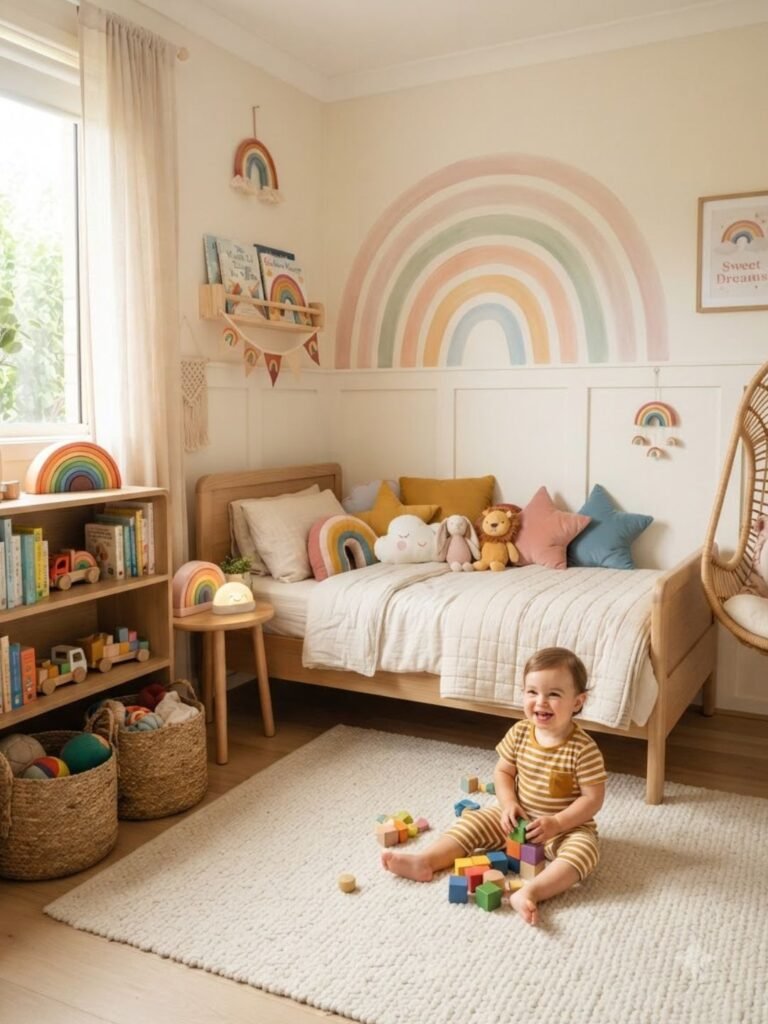
Muted terracotta, mustard, dusty pink, or warm clay can bring personality without overwhelming the room.
For especially small rooms, consider keeping the walls light and introducing stronger color through bedding, artwork, and rugs.
For larger rooms, an accent wall can provide a useful visual anchor.
A helpful rule is to choose one dominant neutral, one supporting color, and one small accent rather than using every color at once.
Consider everything that will actually live in the room: clothing, books, stuffed animals, toys, blankets, shoes, diapers or changing supplies, and seasonal items.
Then decide what should be visible and what should be hidden.
Open shelving is great for a small number of attractive books and toys.
Baskets are useful for soft toys and everyday clutter.
Drawers are ideal for clothing and smaller items.
Closed cabinets are especially valuable when you want a cleaner visual appearance.
Remember that the goal isn’t to eliminate every toy from view. A child’s bedroom should look lived in. The goal is to give the clutter somewhere to go.
What to Avoid When Decorating a Toddler Bedroom
Avoid designing the entire room around a trend that your child may quickly outgrow.
Avoid filling every wall simply because the walls are empty.
Avoid buying large furniture pieces before measuring the room carefully.
Avoid creating storage systems that are complicated for both the child and parent to maintain.
Avoid choosing beautiful but impractical materials for surfaces that experience heavy daily use.
A washable rug is usually more practical than a delicate decorative one. A wipeable surface may be preferable to fabric near messy play areas. Storage that takes five seconds to use is more likely to stay organized than a system requiring detailed sorting.
Frequently Asked Questions About Toddler Bedrooms
What furniture does a toddler bedroom need?
The essentials generally include an appropriate toddler bed or sleep setup, clothing storage, toy or book storage, suitable lighting, and enough open space for safe movement.
How can I make a toddler bedroom look expensive on a budget?
Focus on a cohesive color palette and one standout feature. A painted accent wall, attractive bedding, textured rug, framed artwork, and matching storage baskets can have a major visual impact without requiring a complete furniture makeover.
How do you make a toddler bedroom grow with the child?
Keep permanent elements neutral and introduce age-specific personality through bedding, artwork, toys, and accessories. This makes it easier to update the room without replacing major furniture.
Should a toddler bedroom have a theme?
A theme can be fun, but it doesn’t need to dominate the room. Nature, animals, adventure, rainbows, and other flexible themes can work for several years when introduced through removable elements.
How do I organize toys in a toddler bedroom?
Use a small number of easy-to-access categories and avoid overfilling storage. Low baskets, open shelves, and simple labeled containers make cleanup easier for both children and parents.